 blog
Scaffolding alternatives: what actually works
Last Updated: October 23, 2026
Quick Summary
Scaffolding alternatives including mobile elevated work platforms, scissor lifts, boom lifts, and temporary roof systems offer practical solutions for specific job types in Bath. These alternatives can work better and sometimes more cost-effectively than conventional scaffolding, particularly for short-duration work, heritage properties, or sites with constrained access.
- Mobile platforms setup in hours rather than days and occupy less street space than traditional scaffolding
- Tube and clamp scaffolding provides flexibility for heritage properties to protect original features and distribute loads safely
- Scissor lifts work best for smaller teams and lighter loads over shorter project durations
- Boom lifts extend outward to reach over obstacles and access areas set back from the street
- Site assessment from an experienced provider reveals which solution actually works for your specific building and constraints
Table of Contents
- Why you might need a scaffolding alternative
- Types of scaffolding for construction and when to use them
- Mobile elevated work platforms and scissor lifts
- Temporary roof scaffolding for weather protection
- Scaffolding for heritage properties: protecting period buildings
- Scaffolding quote checklist: what to ask before you commit
- Choosing the right alternative for your project
- Frequently Asked Questions
Why you might need a scaffolding alternative
When you're planning building work in Bath, scaffolding feels inevitable. It's the default choice for most renovation projects, roof repairs, and façade maintenance. But standard scaffolding isn't always the right solution for every job.
The reality is that traditional scaffolding comes with real constraints. It takes up street space in terraced areas where parking is already tight. It requires planning permission for listed buildings. Setup and dismantling take time. And if your property has narrow access or uneven ground, the logistics become complicated fast.
This is where understanding your options matters. Temporary access solutions have evolved significantly. Mobile elevated work platforms, scissor lifts, roof scaffolding systems, and specialized equipment for heritage properties now offer practical scaffolding alternatives that can work better, and sometimes more cost-effectively, than conventional scaffolding for specific job types.
At Able Scaffolding Bath, we've worked across hundreds of projects where the initial assumption about scaffolding didn't match what the site actually needed. The best approach depends on your building type, access constraints, project duration, and the specific work being done. This guide breaks down what's available and how to choose the right solution.
Types of scaffolding for construction and when to use them
Understanding different scaffolding types helps you make an informed decision before you even get a quote. Each type serves distinct purposes and performs differently depending on your project requirements.
Frame scaffolding is the most common type you'll see on building sites. It uses modular frames and horizontal/vertical tubes bolted together to create a rigid structure. This works well for large projects requiring extensive coverage, new construction, or major façade work where you need a stable platform for multiple workers and materials. Frame scaffolding handles heavy loads and provides reliable access for extended periods.
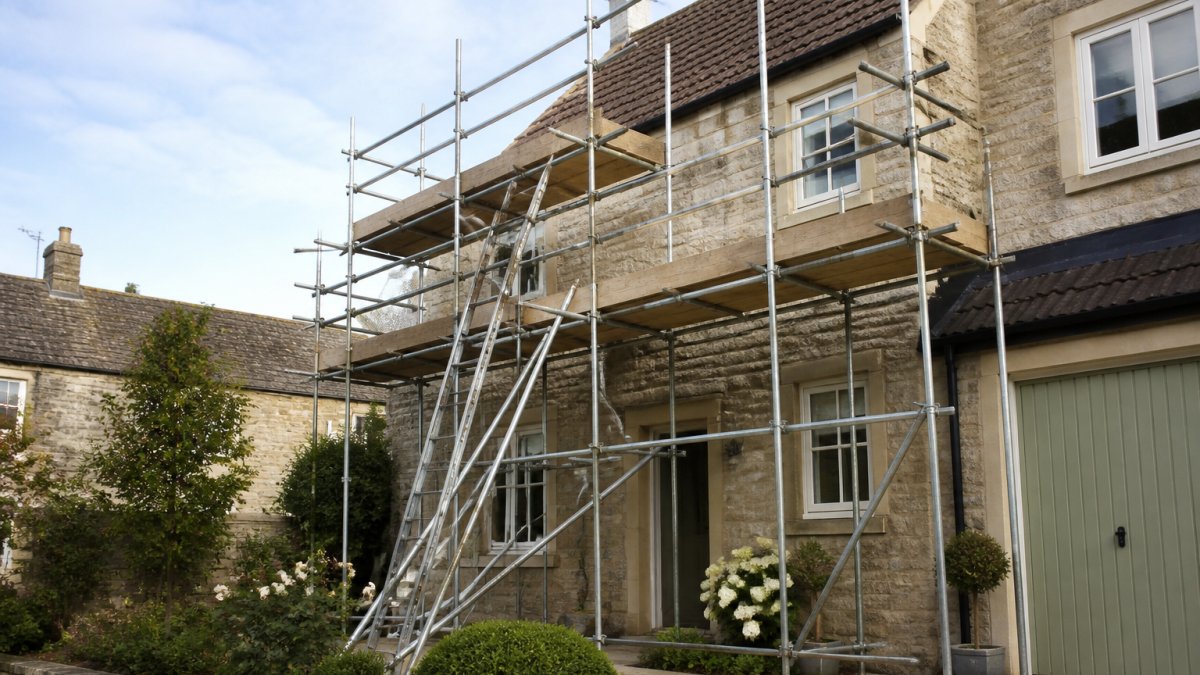
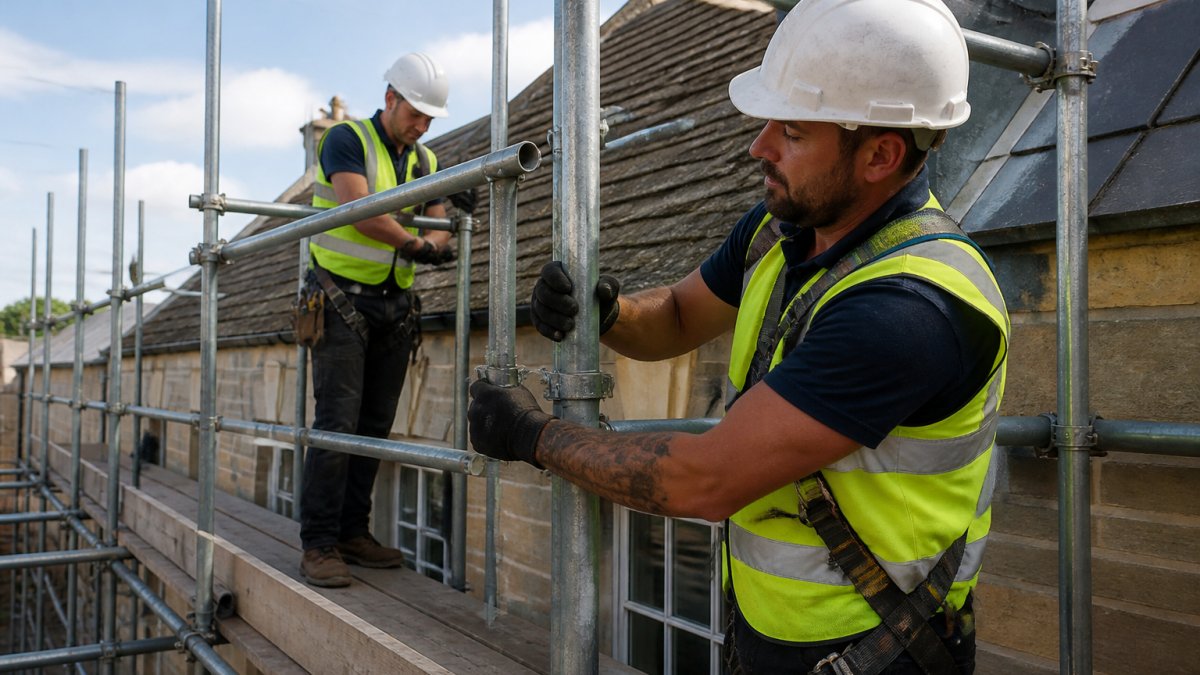
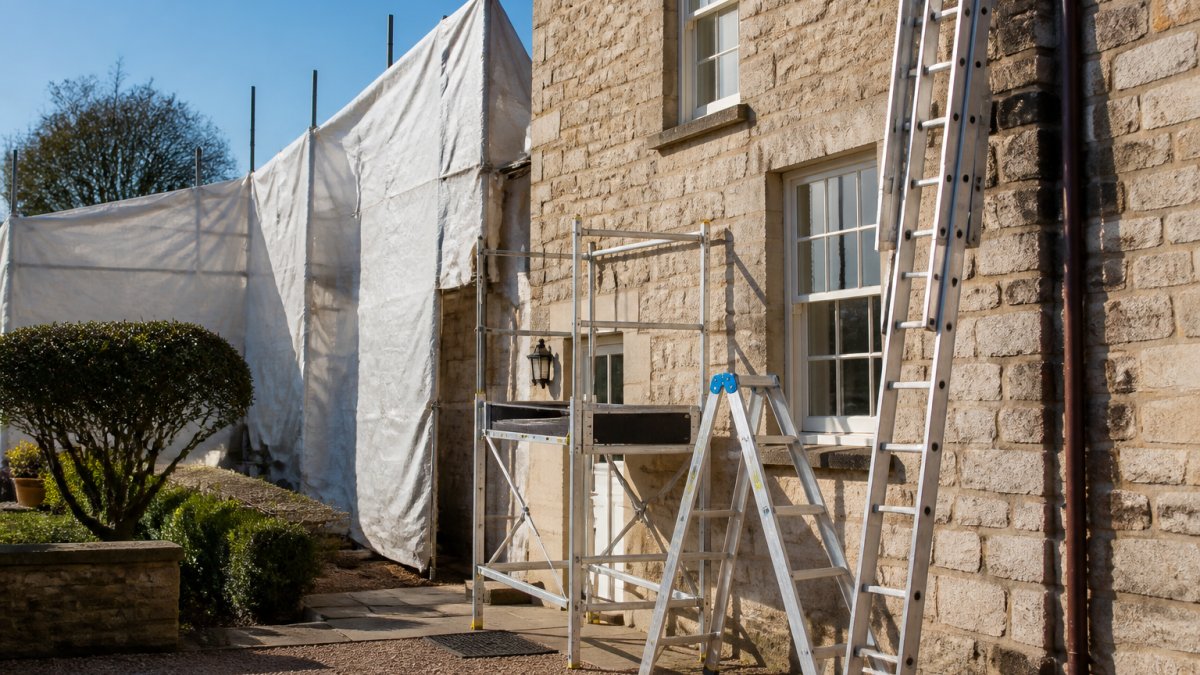
Tube and clamp scaffolding offers flexibility where frame systems won't fit. Individual tubes are connected with clamps, allowing you to build around architectural features, irregular shapes, or confined spaces. This type is invaluable for heritage properties with complex stonework or period features where you need to work around existing structures without damaging them. Setup takes longer, but the adaptability often justifies the extra time.
Suspended scaffolding hangs from roof structures or rigging points above. It's essential for chimney repairs, façade cleaning on tall buildings, or work where ground-level access is impossible. This requires specialist rigging and safety certification, but for high-level exterior work, it's often the only practical option.
Each type requires different safety planning, load calculations, and installation expertise. The choice depends on your building's layout, the nature of the work, site access, and how long you'll need the equipment in place.
Mobile elevated work platforms and scissor lifts
Mobile elevated work platforms and scissor lifts represent a fundamentally different approach to access equipment. Instead of building a fixed structure, you're using self-propelled machinery to lift workers and materials to working height.
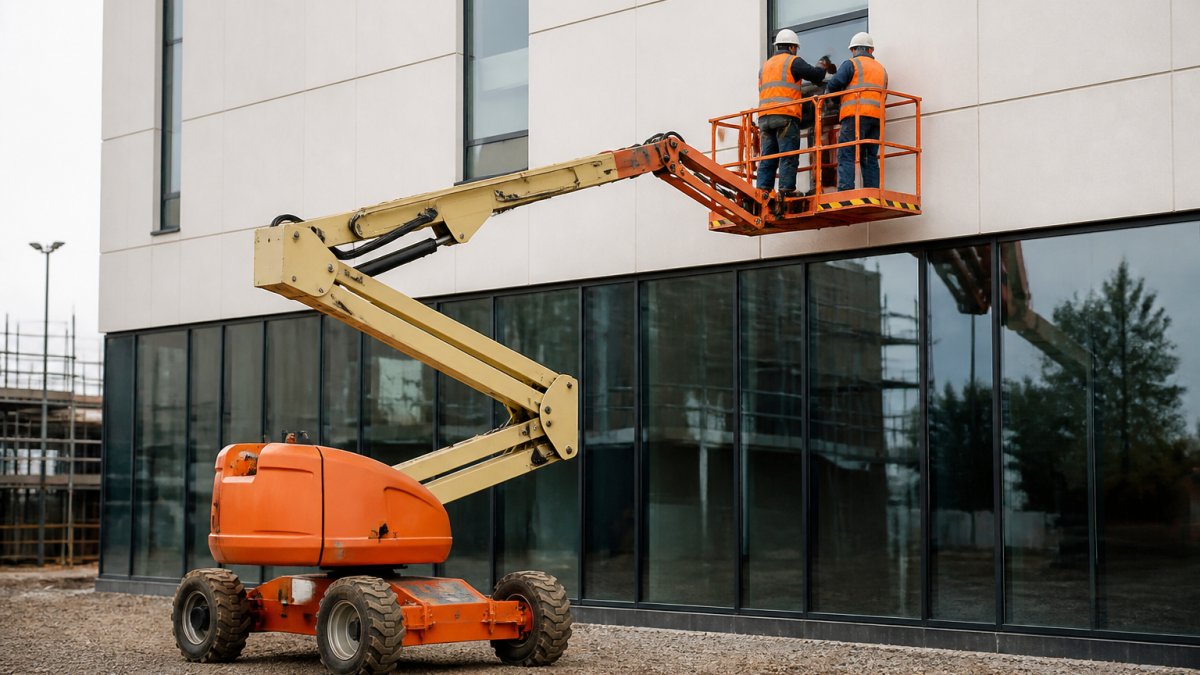
Scissor lifts work by extending vertical pantograph mechanisms. They move straight up and down, making them ideal for work directly above the lift's position. They're compact, which matters when you have limited ground space or narrow streets. Scissor lifts work well for internal work, roofing tasks where you need vertical access, or exterior maintenance on buildings where you can position the equipment nearby.
Boom lifts (articulating or telescopic) extend outward as well as upward. This means you can reach over obstacles, access areas set back from the street, or work on building sections that aren't directly adjacent to where the equipment sits.
The main advantage over traditional scaffolding is speed and footprint. Setup happens in hours rather than days. You occupy less street space, which matters enormously in Bath's narrow terraced streets where parking and traffic flow are already constrained. For short-duration work, a week or two of repairs, mobile platforms often prove more economical than scaffolding.
The trade-off is that these platforms work best for smaller teams and lighter loads. If you need to move large quantities of materials or have multiple workers on the platform simultaneously for extended periods, traditional scaffolding becomes more practical.
Temporary roof scaffolding for weather protection
Temporary roof scaffolding serves a specific purpose: protecting the work area and workers from weather while work continues. This isn't about access, it's about creating a controlled environment during roof repairs, chimney work, or external maintenance.
Temporary roof systems typically use lightweight frames with weatherproof covering. They're erected quickly over the work zone, allowing tradespeople to continue working regardless of rain or wind. For projects in Bath where weather delays are common, this can significantly compress project timelines.
These systems work best for concentrated work areas, a section of roof, a chimney stack, or a specific façade section. They're less practical for work spread across an entire building face. Installation requires careful planning around existing roof structures and load calculations to ensure the temporary system doesn't damage the building.
The cost varies significantly based on coverage area and duration.
Scaffolding for heritage properties: protecting period buildings
Heritage and listed buildings introduce constraints that don't exist with standard construction. Bath stone, original joinery, period features, and architectural significance mean you can't simply bolt scaffolding to whatever surface is convenient.
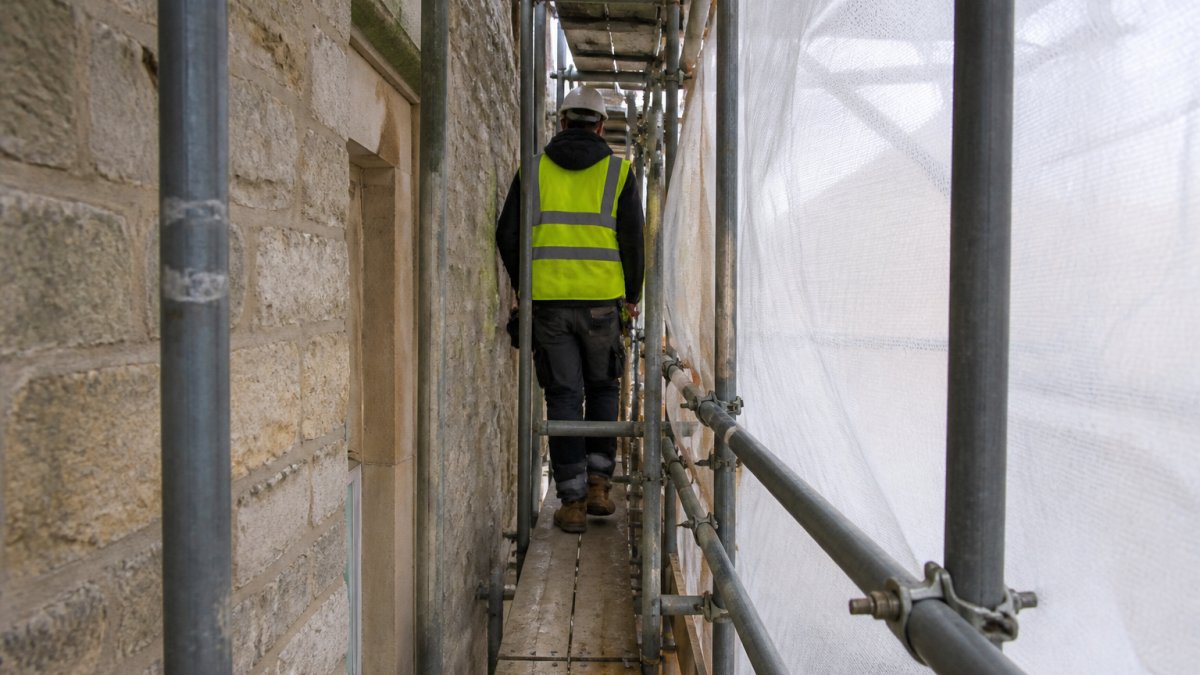
Tube and clamp scaffolding becomes essential here. Its flexibility allows you to build systems that distribute loads across larger areas, minimizing point contact with vulnerable stonework. Specialist contractors understand how to protect original features, using timber pads, careful tie-in points, and load distribution techniques that prevent damage.
Free, no-obligation quotations →
Many heritage projects also benefit from mobile platforms for specific tasks. Chimney repairs, window restoration, or stonework repointing can often be completed from a scissor lift or boom lift positioned on the street or in a small courtyard area. This reduces the overall scaffolding footprint and the time the building is covered.
Planning permission considerations matter too. Listed building consent often requires detailed method statements showing exactly how access equipment will be installed and what protection measures are in place. Working with experienced providers who understand Bath's heritage constraints, and can produce the drawings and specifications required, saves time and prevents approval delays.
Scaffolding quote checklist: what to ask before you commit
Getting multiple quotes is standard practice, but knowing what to ask separates useful quotes from incomplete ones. The right questions reveal whether a provider understands your specific project and can deliver what you actually need.
Ask about site assessment. A proper quote includes a site visit where the provider evaluates access, ground conditions, building features, and any constraints. If you get a quote without someone visiting, it's probably too generic to be reliable.
Clarify what's included. Does the quote cover erection, dismantling, hire period, insurance, and safety certification? Are there additional costs for extended hire, bad weather delays, or modifications once work starts? Understanding the full scope prevents surprise invoices.
Ask about the provider's own resources. Do they own equipment and operate their own crews, or do they subcontract work? Providers with their own teams typically deliver more consistent service and take direct responsibility for problems.
Confirm timescales. Ask how long erection takes, what the hire period covers, and when dismantling is scheduled. Clarify what happens if your project runs over schedule.
Check safety and compliance. Confirm that the provider holds relevant certifications, carries appropriate insurance, and complies with Working at Height Regulations. Ask what safety inductions and documentation they provide.
Ask about alternatives. A provider who suggests scaffolding alternatives like mobile platforms or other solutions for parts of your project shows they're thinking about what actually works for your site, not just selling their standard offering.
| Checklist Item | Why It Matters | What to Look For |
|---|---|---|
| Site assessment completed | Ensures quote reflects actual conditions | Provider visited and documented constraints |
| Scope clearly defined | Prevents hidden costs and surprises | Erection, hire, dismantling, insurance all specified |
| Own equipment and crews | Reduces delays and accountability gaps | Provider operates their own teams |
| Method statement provided | Critical for heritage buildings | Written plan showing installation and protection |
| Timescales confirmed | Prevents project delays | Setup duration and hire period clearly stated |
| Safety compliance verified | Meets legal requirements | Certifications, insurance, and training documented |
| Alternatives discussed | Shows tailored approach | Provider suggests solutions specific to your site |
Choosing the right alternative for your project
The best access solution depends on four key factors: the type of work, the building's characteristics, how long you need the equipment, and your site's physical constraints.
For short-duration work on accessible buildings, mobile elevated work platforms often outperform traditional scaffolding.
For extended projects on standard buildings, frame scaffolding remains the most practical choice.
For heritage properties, start by understanding what the building will tolerate. Listed building consent often influences your options. Tube and clamp scaffolding gives you flexibility to protect original features. Mobile platforms can handle specific tasks without extensive coverage.
For constrained sites, narrow streets, limited parking, uneven ground, or buildings with complex architecture, this is where alternatives shine. Boom lifts reach over obstacles. Scissor lifts fit tight spaces. Mobile platforms reduce ground footprint.
The decision ultimately comes down to matching the equipment to your specific situation rather than defaulting to whatever is most common. A provider who understands Bath's building stock, its access constraints, and the range of available solutions can help you avoid expensive mistakes.
At Able Scaffolding Bath, we've spent over 35 years working on exactly these kinds of decisions.
Getting the right access solution starts with understanding what your building and project actually need. The alternatives to traditional scaffolding have become genuinely practical for many jobs, but they're not automatically better, they're just different tools suited to different situations.
If you're planning work in Bath or the surrounding areas, request a free, no-obligation quotation from Able Scaffolding Bath. We'll visit your site, assess the constraints, and recommend the approach that delivers the best value and safety for your specific project.
Frequently Asked Questions
What are the main scaffolding alternatives for building work?
The most practical alternatives to traditional scaffolding include mobile elevated work platforms (MEWPs) such as scissor lifts and boom lifts, tube and clamp systems for custom configurations, suspended scaffolding for façade work, and mobile scaffold towers for smaller projects. Each suits different access heights, site constraints, and project durations. The right choice depends on your work area dimensions, ground stability, duration, and whether you need weather protection or specialized heritage-building protection.
How do I choose scaffolding for a heritage property?
Heritage buildings require protection from chipping, staining, and structural stress. Specialist solutions include padded or fabric-wrapped scaffold tubes, tube and clamp systems that distribute load more carefully, and suspended platforms that avoid ground contact on sensitive stonework. Ask your provider about experience with listed buildings, their protection methods, and whether they can produce drawings showing how the structure will be safeguarded. Many heritage projects in Bath benefit from bespoke planning rather than standard off-the-shelf solutions.
What should I include in a scaffolding quote checklist?
Request itemized quotes covering erection and dismantling labour, equipment hire duration, load capacity confirmation, weather protection (if needed), insurance and liability cover, site drawings showing equipment placement, timescales for setup and completion, and any additional costs for restricted access or ground conditions. Ask whether the company uses its own crews and equipment or subcontracts work. Clarify payment terms, cancellation policies, and what happens if the project overruns. Compare total cost against timeline and service scope, not just the headline figure.
How long does it take to erect and dismantle scaffolding?
Erection time varies widely depending on height, complexity, and site access. A simple single-storey residential project might take one to two days, while multi-storey commercial work or heritage properties with protective measures can take a week or longer. Dismantling typically takes slightly less time than erection. Narrow terraced streets, uneven ground, or need for temporary roofing systems extend timescales. Always request a detailed schedule during quotation so you can coordinate other trades and plan site access accordingly.