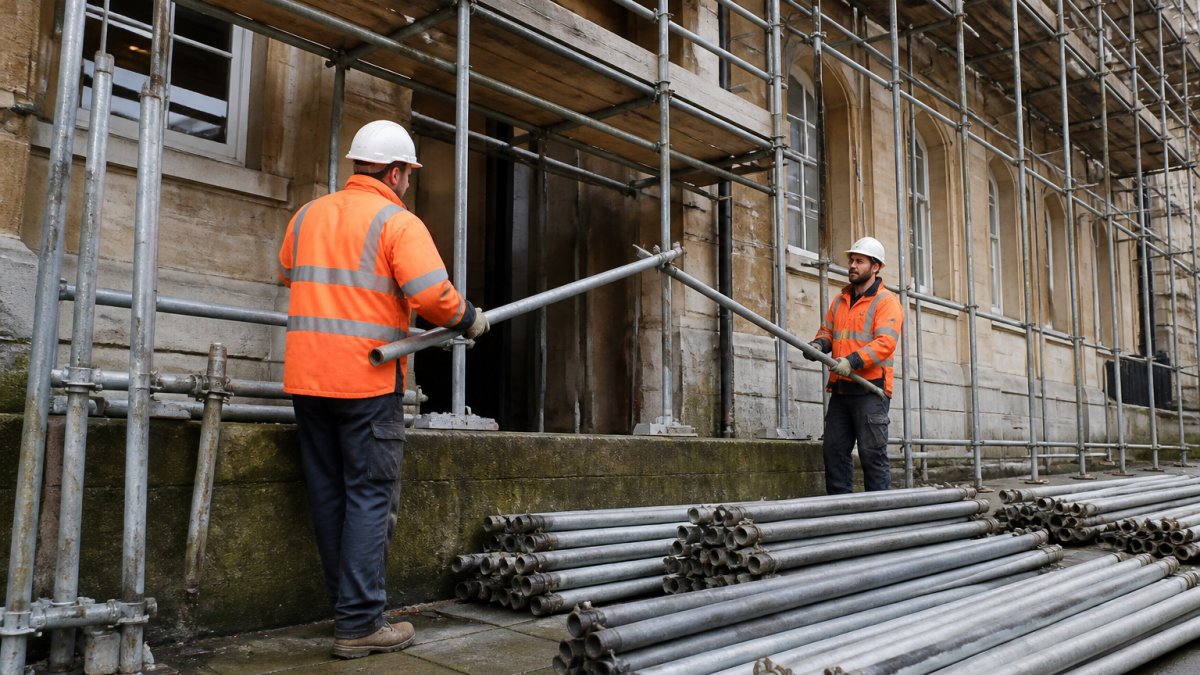
 comparison
Scaffolding Company That Erects Own Equipment
Table of Contents
- Why a Scaffolding Company That Erects Its Own Equipment Makes a Difference
- Scaffolding Hire and Erection: The Full-Service Model Explained
- Scaffolding for Period Properties: Protecting Historic Stonework and Features
- Temporary Roof Scaffolding: Weather Protection and Project Continuity
- Getting a Scaffolding Quote: What to Expect and What to Ask For
- Accountability, Reliability, and Compliance When One Company Does It All
- Frequently Asked Questions
Last Updated: October 14, 2026
Why a Scaffolding Company That Erects Its Own Equipment Makes a Difference
Hiring a scaffolding company that erects own equipment is a fundamentally different service model from subcontracting, and the distinction matters more than most property owners realise.
The difference comes down to accountability. When one company owns the equipment, manages transport, and provides the crews that erect and dismantle the structure, responsibility sits in one place: no finger-pointing, no delays, no miscommunication about site requirements or safety standards.
At Able Scaffolding Bath, we've spent over 35 years managing projects with this integrated approach. When we quote a job, we commit our own crews, equipment, and reputation.
The practical benefits: a single point of contact, consistent quality because the same team handles every stage, competitive pricing without subcontractor mark-ups, and reliability because we control the schedule.
Scaffolding Hire and Erection: The Full-Service Model Explained
Scaffolding hire and erection describes a complete service where the provider supplies the equipment and handles installation, inspection, and removal, unlike hire-only services where you arrange erection separately. Most buyers do not realise there are three distinct models, and choosing the wrong one is the biggest cause of project delay.
The Three Service Models Compared
Supply-only. You buy or hire the components and take delivery, then handle design, erection, inspection, and dismantling. It suits contractors with their own competent scaffolders and a nominated supervisor, but it is the cheapest headline price and the highest risk without in-house competence.
Hire-and-erect (equipment hire plus separate installer). You hire equipment from one company and engage a separate erection contractor.
Full-service (the model this article is about). One company owns the equipment, designs the structure, erects it, inspects it, and dismantles it. The keyword, a scaffolding company that erects its own equipment, points directly at this model, which most directories and manufacturer pages fail to explain.
| Model | Who designs | Who erects | Who inspects | Who carries risk |
|---|---|---|---|---|
| Supply-only | You | You | You | You |
| Hire-and-erect | Split | Separate contractor | Split | Shared, often disputed |
| Full-service | Provider | Provider | Provider | Provider |
What an Erection Service Actually Includes
A genuine full-service erection scope typically covers:
- Site survey and scaffold design, including loading calculations where required
- Delivery and positioning of components
- Erection to the design, including ties, bracing, and edge protection
- Handover inspection and a scaffold tag or register entry
- Statutory inspections at the required intervals (typically every seven days and after any event likely to affect stability, such as high winds or alteration) (Scaffolding)
- Alterations during the project as trades require
- Dismantling, removal, and site clearance
Ask any provider to confirm in writing which are included. Quotes often cover erection and dismantling but exclude mid-project alterations, charged later as variations.
Where Responsibility Sits After Handover
This is the question competitors rarely answer. Once a scaffold is erected and handed over, day-to-day responsibility for not altering it sits with the site. Under the Work at Height Regulations 2005, the duty to ensure the scaffold remains safe rests with the employer or person in control of the site. In practice:
- No one removes ties, boards, or guardrails without the scaffolding provider's agreement
- The provider returns to inspect at the statutory intervals and records the outcome
- Any damage or alteration is reported immediately and the scaffold is not used until re-inspected
A full-service provider keeps that inspection record and can produce it on request; with a split hire-and-erect arrangement it is often incomplete, exactly the gap a single-provider model closes.
Scaffolding for Period Properties: Protecting Historic Stonework and Features
Historic buildings demand specialist scaffolding solutions. Standard approaches can damage original stonework, mortar, and decorative features that took centuries to create. A scaffolding company that erects own equipment and specialises in heritage work understands these sensitivities from the start.
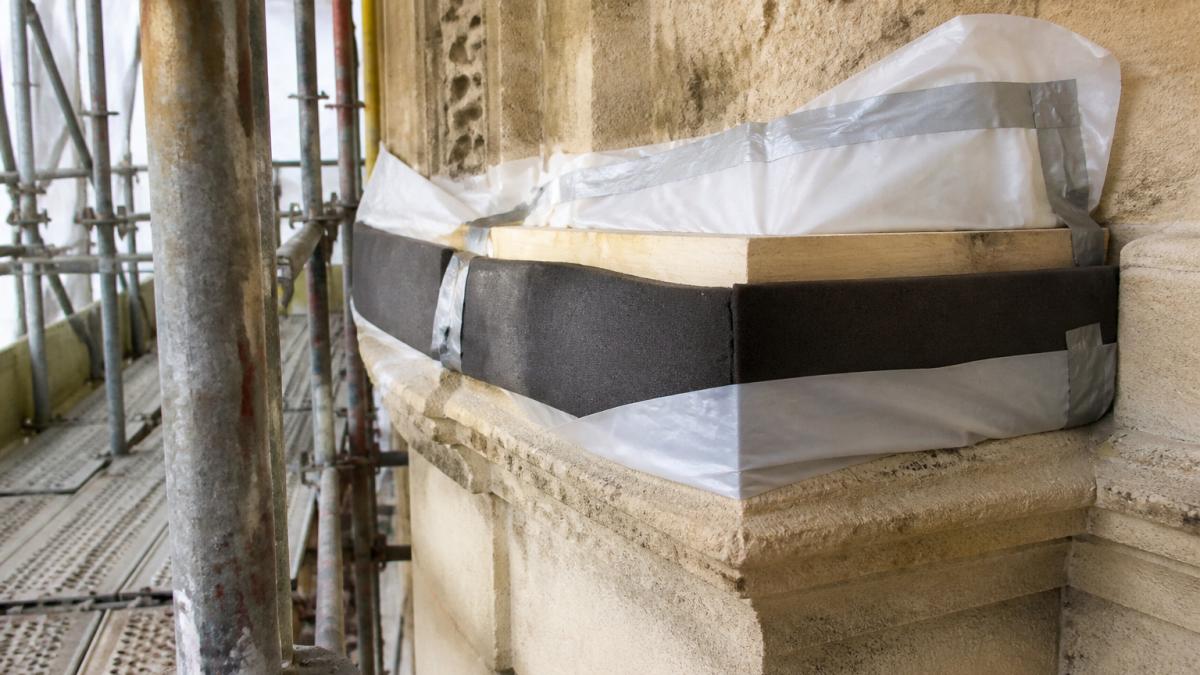
Bath stone is softer than modern masonry, more prone to frost damage, and often features decorative mouldings or ashlar pointing that needs specialist craftspeople to replace.
Our approach begins with a detailed site survey: we photograph existing conditions, identify vulnerable areas, and design the scaffold to distribute loads safely.
Bath Stone and Heritage Building Challenges
Bath stone's softer composition makes it susceptible to damage from pressure, vibration, and weather exposure, so even minor impacts during erection can cause chipping. Existing mortar joints may also be weaker than the stone itself, particularly where lime mortar was used.
The architectural details that make period properties valuable are often the most vulnerable. String courses, cornices, window surrounds, and decorative quoins protrude slightly from the main wall, so scaffolding must avoid contact with them. On narrow terraced properties this often means specialist systems like rolling scaffolding or lightweight aluminium components that reduce loading on the facade.
Access Planning in Narrow Streets and Terraced Properties
Terraced streets in Bath present logistical challenges generic scaffolding companies often underestimate: parking restrictions, narrow pavements, overhead utilities, and neighbouring properties all constrain how equipment can be delivered and assembled.
A scaffolding company that erects own equipment and operates locally understands these constraints.
For terraced properties we often use narrower scaffold widths or staggered erection schedules, coordinating with local authorities where necessary. This prevents the delays that occur when a contractor arrives unprepared for the site's actual conditions.
If a scaffolding company quotes your terraced property without visiting the site first, they're likely underestimating access challenges. Narrow streets, parked cars, and overhead lines require detailed planning that only comes from on-site assessment.
Temporary Roof Scaffolding: Weather Protection and Project Continuity
Temporary roof scaffolding serves two purposes: it protects the building and the work below from weather, and it lets projects continue through rain or wind that would otherwise halt progress.
For roof repairs, leadwork, or external decoration, a temporary roof prevents water ingress while work proceeds, and protects scaffolding workers from weather exposure so they can work more safely and efficiently.
Temporary roof design depends on the building's size, project duration, and local weather.
When a scaffolding company that erects own equipment installs temporary roofing, it designs the covering as part of the overall scaffold system, integrated, properly secured, and inspected regularly.
Getting a Scaffolding Quote: What to Expect and What to Ask For
A proper scaffolding quote covers more than cost: it should detail the scope of work, timeline, safety measures, and the company's responsibilities, and explain what drives the price, because no two sites price the same way.
What Actually Drives the Cost
Scaffolding is priced on a combination of factors; understanding them lets you compare quotes fairly rather than on headline figures alone.
- Hire duration. Most providers charge a weekly rate after a minimum period, commonly four weeks. A job quoted at four weeks but running to twelve costs materially more, so ask for the weekly rate after the minimum.
- Scaffold type and height. Tube-and-fitting, system (modular), and lightweight aluminium systems carry different labour and material costs. Height adds material and erection time, and above certain heights design and tie requirements become more involved.
- Access complexity. Narrow terraces, restricted parking, overhead lines, and limited delivery windows all add labour. A highway occupation permit or parking bay suspension carries extra cost and lead time.
- Ground conditions. Soft ground, slopes, or surfaces that cannot take leg loads may require base plates, sole boards, or spreaders, all adding cost.
- Ancillary items. Temporary roofs, loading bays, hoists, and stair towers are priced separately.
- Labour rates. Erection and dismantling are labour-heavy; regional rates and the number of operatives affect the total.
A quote that gives a single lump sum without breaking these out is difficult to compare and easy to inflate later through variations.
Compliance and Insurance Checks Before You Appoint
This is the part most buyers skip, and where the real risk sits. Before appointing any scaffolding company, verify:
- Competence. Scaffolders should hold a current industry competence card for the work type, and the company should have a nominated competent person overseeing design and erection.
- Design and inspection. For anything beyond a basic configuration, ask who designs the scaffold and signs off the handover inspection; the provider should produce design information and an inspection record.
- Insurance. Ask for current employers' liability and public liability certificates, and check cover levels suit the project. Employers' liability cover is a legal requirement for most employers (Employers' Liability (Compulsory Insurance) Act 1969).
- Method statement and risk assessment. A reputable provider supplies both before work starts, specific to your site rather than a generic template.
- References. Ask for two or three recent projects of similar type, particularly heritage or occupied-building work.
What the Quote Document Should Specify
The quote should specify:
- The type and height of scaffolding
- The erection and dismantling dates
- Weekly or monthly hire rates if applicable, and the minimum hire period
- Any additional services (temporary roofing, hoists, specialist systems)
- Safety certification and insurance details
- Inspection frequency and maintenance responsibilities
- Weather contingencies and delay protocols
- What counts as a variation and how variations are priced
Ask how they'll protect the building during erection, for period properties, specifically about stonework and decorative features, and ask about their experience with similar projects and for references from recent local work.
A reputable company will answer these directly, provide drawings or site plans showing scaffold positioning, and explain safety procedures.
Request a quote in writing that breaks down costs separately: equipment, erection, weekly hire, dismantling, and any additional services. This makes it easier to compare quotes fairly and understand what you're paying for. Then check the insurance certificate and competence cards before you sign, not after the scaffold goes up.
Accountability, Reliability, and Compliance When One Company Does It All
The hidden value of a scaffolding company that erects own equipment lies in accountability: when erection, hire, and dismantling are managed by one organisation, quality standards stay consistent throughout the project.
Compliance and safety certifications become simpler to verify, one company's insurance, safety record, and crew qualifications, with no risk that a subcontracted erection crew has lower standards than the equipment supplier.
For commercial work where delays hit business operations, this reliability is critical.
Compliance is also more straightforward: a scaffolding company that erects own equipment must maintain consistent standards across all phases, reducing the risk of gaps in inspection protocols or safety procedures.
When you're planning a scaffolding project, the decision between a subcontracting model and a company that erects its own equipment often determines whether the project runs smoothly or encounters frustrations. Our 35 years of experience across domestic, commercial, and heritage projects means we understand the specific challenges of your building and your site.
Frequently Asked Questions
What are the benefits of a scaffolding company using its own equipment?
A scaffolding company that erects its own equipment eliminates subcontracting delays, ensures single-point accountability, and allows the same team to manage setup, inspection, maintenance, and dismantling. This reduces miscommunication, speeds up problem-solving, and gives you direct contact with the people responsible for your project. You also benefit from equipment that's maintained to the company's own standards and available when needed, rather than dependent on third-party hire availability.
How do scaffolding companies plan access for period properties?
Experienced scaffolding contractors assess period properties by examining structural integrity, identifying historic materials like original stonework or decorative features, and planning equipment placement to avoid damage. They use protective padding, plan narrow-street access carefully, and often provide detailed site drawings before work begins. This planning phase is critical and worth requesting detailed drawings from your quote.
What should a scaffolding quote include?
A comprehensive scaffolding quote should detail the equipment type and quantity, erection and dismantling dates, site-specific access requirements, any protective measures for period properties, inspection schedules, insurance coverage, and total cost. It should also specify what happens if weather delays the project or if additional work is needed on site. A good quote includes site drawings or photos showing how the scaffold will be positioned, especially important for narrow streets or heritage buildings.
Who is responsible for inspecting scaffolding after it has been erected?
The scaffolding contractor is responsible for initial inspection and certification after erection. Regular inspections are also required during the project, especially after bad weather. When you work with a company that erects its own equipment, they manage the full inspection cycle and can respond immediately if issues arise, rather than waiting for a separate inspection company.