 how-to
Avoiding Scaffolding Delays on Site: A Practical Guide
Table of Contents
- Why Scaffolding Delays Damage Your Project Timeline
- Create a Scaffolding Planning Checklist Before Work Starts
- Scaffold Access Requirements and Site Constraints
- Book Scaffold Installation Time Well in Advance
- Coordinate Temporary Roof Scaffolding with Weather and Trades
- Establish Clear Communication and Responsibility
- Monitor Progress and Respond to Blockers
- Frequently Asked Questions
Last Updated: October 12, 2026
Why Scaffolding Delays Damage Your Project Timeline
Avoiding scaffolding delays is the difference between finishing on schedule and watching your budget evaporate. When scaffolding arrives late, trades wait, weather windows close, and customers get frustrated.
We've seen projects slip by weeks because installation time wasn't booked early or the survey revealed unanticipated access problems.
Create a Scaffolding Planning Checklist Before Work Starts
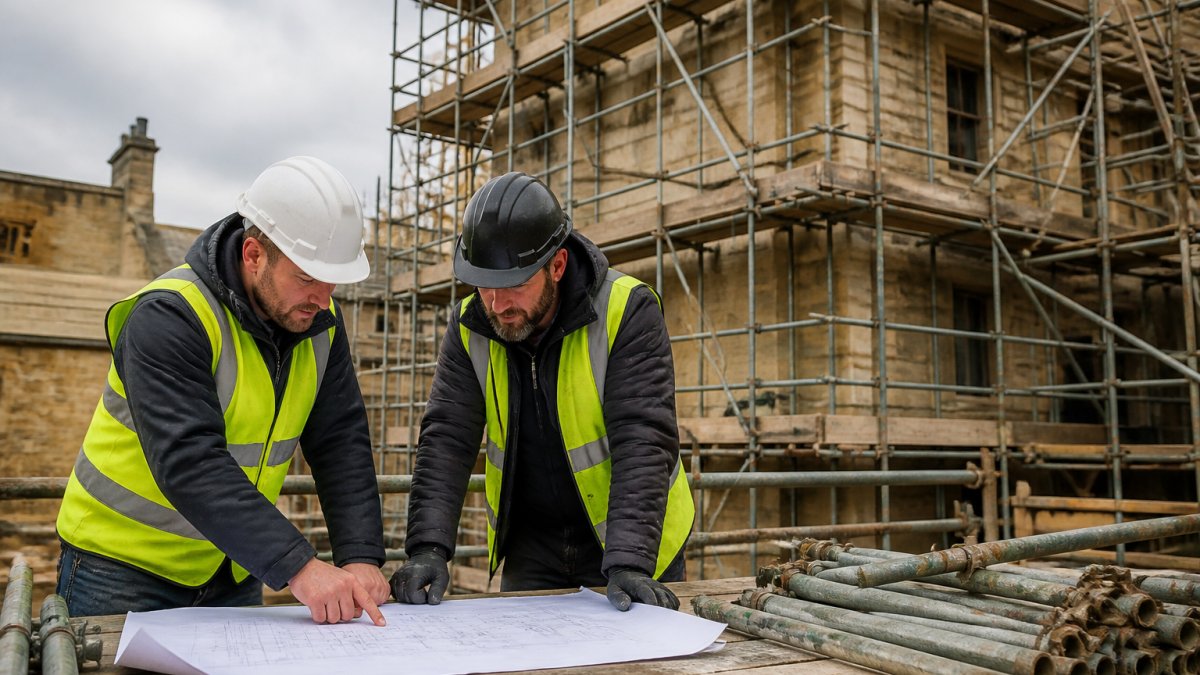
You can't avoid scaffolding delays by reacting to them. You prevent them by planning backwards from your installation date, starting with a detailed site survey, get on site with a tape measure and document every dimension that matters.
Site survey and measurements
A proper survey captures what your supplier needs to design the system and book the right lead times. Most projects fail here: teams hand over incomplete data, then act surprised when the supplier needs clarification.
Your survey should include:
- Building dimensions (height, width, depth, roof pitch)
- Ground conditions (concrete, tarmac, soil, slope)
- Obstructions (power lines, trees, parked cars, neighbouring buildings)
Take photographs from multiple angles and note anything unusual: narrow streets, tight corners, overhead hazards, or ground-level constraints.
Access route assessment
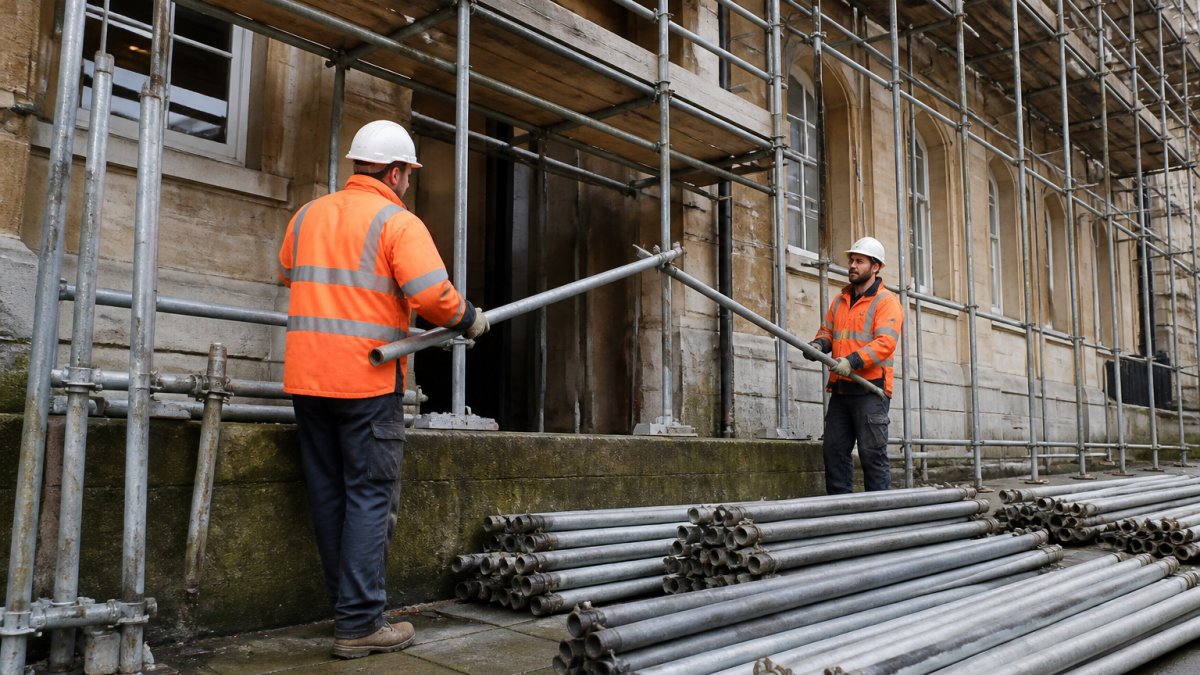
Before you book scaffold installation time, verify that delivery vehicles can reach your site. This is where many projects hit their first real delay.
Measure your access route carefully:
- Road width and any restrictions (weight limits, height restrictions, one-way streets)
- Gate and entrance widths
- Overhead clearance (bridges, power lines, hanging signs)
Many sites in the region have narrow terraced streets with parked cars on both sides. Your supplier needs to know upfront so they can plan smaller loads or multiple deliveries instead of arriving with a 40-tonne lorry that won't fit.
Permit and approval requirements
Heritage buildings, listed properties, and conservation areas often require planning permission or conservation officer approval before scaffolding can go up, a hard dependency that adds weeks if discovered late.
Check with your local authority:
- Do you need scaffolding consent?
- Are there conservation area restrictions?
- Does the building have listed status?
Get these approvals in writing before you book your scaffold installation time. On a Grade II listed townhouse with original stonework, approval can take 4-6 weeks.
Scaffold Access Requirements and Site Constraints
Your site's constraints determine whether standard scaffolding will work or whether you need specialist solutions.

Narrow streets and parking restrictions
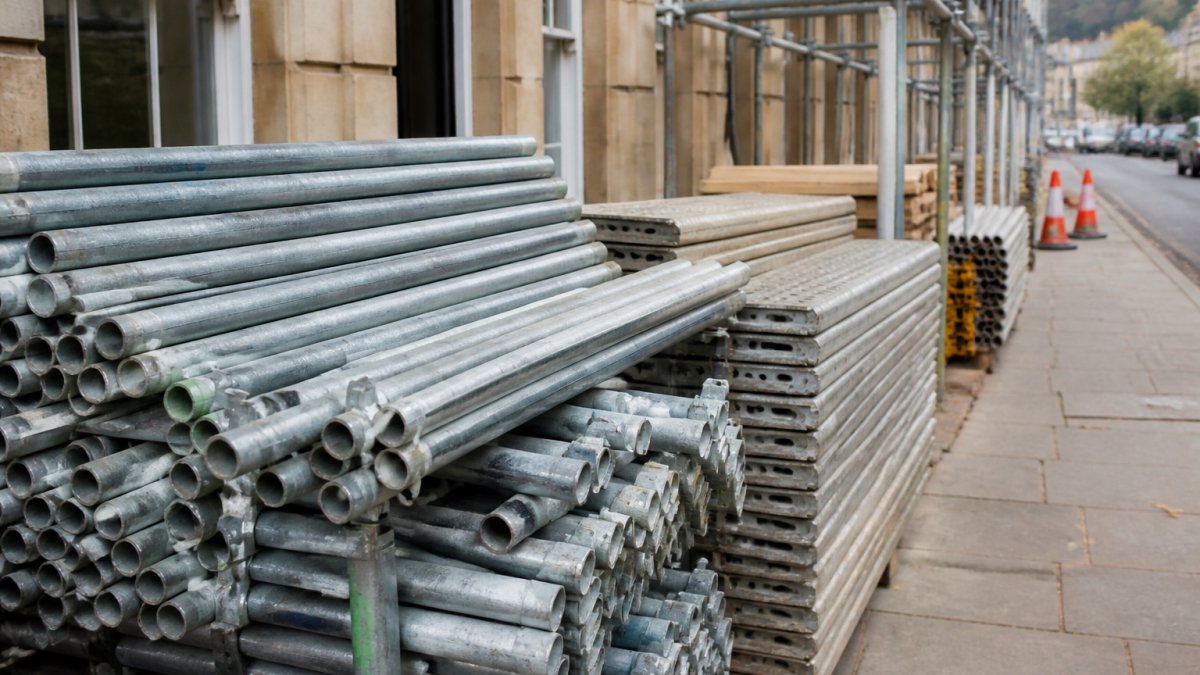
Terraced streets with parked cars on both sides create real problems for scaffold delivery. A standard lorry needs a clear route and space to manoeuvre.
Tell your scaffold supplier upfront:
- Street width and any one-way restrictions
- Typical parking patterns (is the street always full, or does it clear at certain times?)
- Whether you can arrange temporary parking restrictions
Some suppliers charge extra for restricted access. That's fine, the real problem is discovering the restriction after you've booked the installation date.
Period properties and stonework protection
Period properties need specialist protection. Standard metal scaffolding can chip original Bath stone, damage mortar joints, or leave rust stains that are almost impossible to remove.
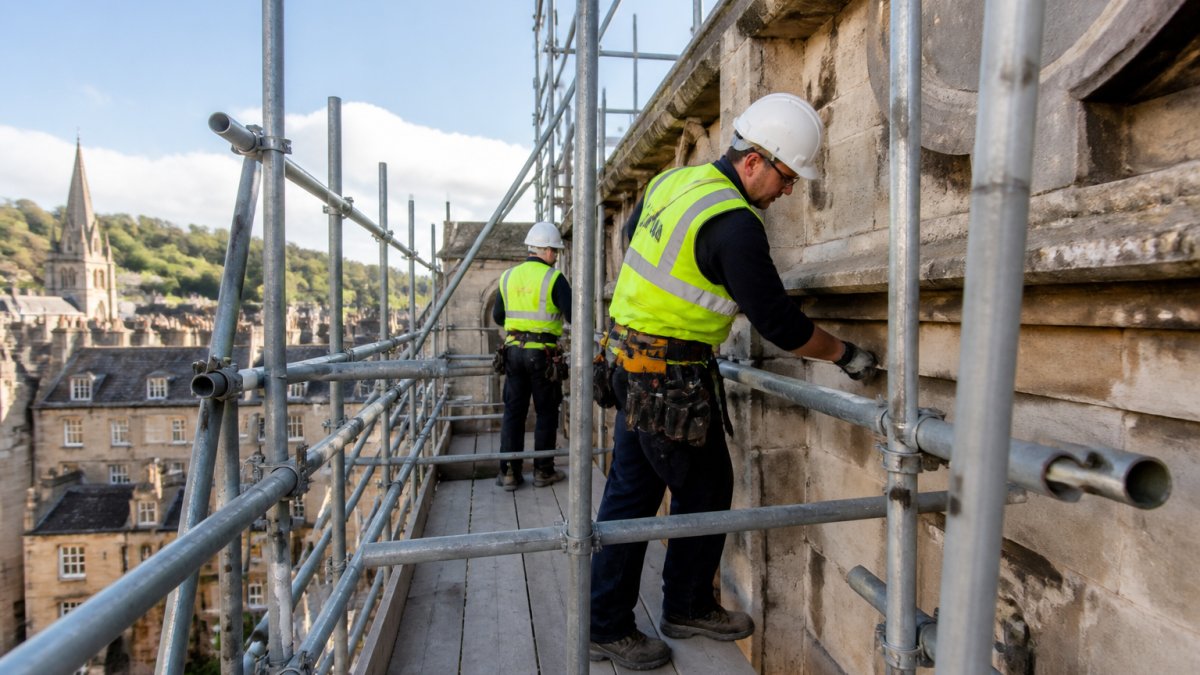
Protecting heritage buildings requires specialist methods. We use protective boarding, rubber-tipped base plates, and careful positioning to avoid contact damage.
Tell your supplier:
- Whether the building is listed or in a conservation area
- What the stonework condition is (original, repointed, sensitive mortar)
- Whether there are any areas that absolutely cannot be touched
This affects both design and installation time, so budget for it upfront.
Book Scaffold Installation Time Well in Advance
This is where avoiding scaffolding delays actually happens: you prevent them by booking early, not by managing them better.
Lead times and supplier availability
Scaffold suppliers don't keep towers idle waiting for work, they're booked weeks or months ahead, especially in busy seasons. Call in March for April installation and you're competing with dozens of projects for the same equipment.
Lead times vary by season and by how busy the supplier is:
- Summer months (May to September): 6-8 weeks is typical
- Spring and autumn: 4-6 weeks
- Winter: 2-4 weeks (less demand, but weather complications)
These lead times reflect how long it takes to schedule crews, plan logistics, and position equipment.
Seasonal demand and weather windows
Demand peaks in summer when construction activity is highest and weather is predictable. For June work, book in February or March; wait until April and you're already behind.
Weather windows matter too. Winter scaffolding is possible but complicated by rain and ground saturation (base stability), frost and ice (safety and speed), shorter daylight hours, and wind restrictions (many systems can't be erected safely in high winds).
Coordinate Temporary Roof Scaffolding with Weather and Trades
Temporary roofing systems add complexity, they depend on weather, scaffold completion, and coordination with other trades.
Sequencing with other contractors
Your scaffold isn't the only thing happening on site. Roofers, electricians, plumbers, and decorators all need access. Scaffold up before the roof is stripped means roofers work around it; scaffold up after wastes time.
Free, no-obligation quotations →
Plan the sequence:
- When does the scaffold need to be fully installed?
- When do roofers start stripping the roof?
- When does temporary roofing go on?
Communicate this sequence to all contractors. A one-week roofing delay can delay the whole project if the scaffold is booked for a fixed removal date.
Weather contingency and protection
Temporary roofing systems protect the interior from rain damage, but they're only as good as their installation and maintenance. If a temporary roof fails in a storm or isn't properly sealed, water damage can be catastrophic.
Plan for weather:
- What's the weather forecast for your installation week?
- Do you have contingency dates if weather delays installation?
- Is the temporary roof system rated for the expected wind speeds and rainfall?
Don't assume your supplier handles all of this. Clarify responsibilities upfront: if the temporary roof leaks from poor installation, who pays?
Establish Clear Communication and Responsibility
Delays happen when nobody knows who's responsible for what. You avoid scaffolding delays by making roles explicit, and by choosing a supplier whose service levels support your timeline.
Selecting a scaffold supplier on service, not just price
Most scaffold enquiries go out as a price request, the wrong starting point if your programme is tight.
Before you appoint, ask every supplier the same questions and compare the answers side by side:
- Current lead time for your scaffold type and height, quoted in weeks, not "as soon as possible"
- Erection and dismantle durations for a comparable job, so you can slot them into your programme
- Crew size and certification, are operatives CISRS-carded, and is there a supervisor on every lift?
A supplier who can't answer these in writing before appointment will cost you time later. Get the answers in the quotation or a follow-up email so there's a record if expectations slip.
Agreeing the service level before work starts
Once you've chosen, put the operational detail in writing. A short scaffold-specific scope note should cover:
- Key dates, design sign-off, delivery, erection start, practical completion of the scaffold, alteration windows, and dismantle date
- Notification periods, how much notice you'll give for alterations, and how much notice they'll give if a crew is delayed
- Site access arrangements, gate codes, key holders, parking bays, and who unlocks at what time
This isn't bureaucracy. It's the difference between a supplier who treats your job as a diary entry and one who treats it as a commitment.
One point of contact, both sides
Assign one person on your team as the point of contact for the scaffold supplier. They handle all communication, site access, scheduling changes, weather contingencies, problem-solving, and can make quick decisions without a chain of approval. Ask the supplier to do the same; a single named contracts manager prevents the classic delay where a message sits in a shared inbox while a crew is stood down.
Give your scaffold supplier:
- Your project schedule and key dates
- Contact details for site access (gates, keys, parking arrangements)
- Any site hazards (underground services, overhead lines, soft ground)
Tell your scaffold supplier what you expect:
- Exact installation date and time
- How long installation should take
- What happens if weather delays the work
Communicating changes to the wider site
Scaffold changes ripple: a one-day alteration delay pushes the renderer, roofer, and window fitter too. Keep a simple change log and circulate a short weekly note to all trades confirming scaffold status, erected, altered, inspected, or due for dismantle. That habit prevents the most common scaffold-related delay of all: a trade turning up to find the scaffold isn't ready, then re-booking their crew for a later date.
Monitor Progress and Respond to Blockers
Once installation is underway, monitor it actively. Monitoring without measurement is just watching, record what's happening so you can act on it and improve the next job.
A scaffold delay log you can run on one page
Most sites record delays in someone's head or a WhatsApp thread, which is why the same problems repeat.
Columns to capture:
- Date the issue was identified
- Cause category, design, approval, access, ground, weather, supplier capacity, trade clash, variation, or other
- Description in one line
At the end of the job, total downtime by cause. If weather dominates, your next programme needs more weather contingency. If supplier capacity does, your next appointment needs tighter service-level commitments.
Metrics worth tracking on every scaffold job
You don't need a dashboard. Four numbers tell you whether your scaffold is helping or hindering the programme:
- Lead time achieved vs lead time quoted, how many days between booking and erection, compared with what the supplier promised
- Erection duration vs planned duration, a scaffold that takes three days instead of two eats a day of every following trade
- Alteration response time, hours between your request and the crew attending, averaged across the job
Track these on the same one-page log. After two or three jobs you'll have a realistic benchmark for your own projects, far more useful than a generic industry figure.
Responding to blockers in the right order
When something goes wrong, the instinct is to escalate everything at once. A better sequence:
- Confirm the facts on site. Is the scaffold actually late, or is the crew on a different lift? A five-minute walk beats an hour of phone calls.
- Assess the programme impact. A one-day slip on a scaffold with float is a non-event. A one-day slip on the critical path needs a same-day response.
- Notify the affected trades before they mobilise. A roofer who hasn't left the yard is cheaper to redirect than one already on site.
- Agree the recovery action in writing, who does what, by when. Even a two-line email creates accountability.
- Log it. Every blocker you log becomes a lesson for the next programme.
Common blockers and the fastest fix
- Ground conditions worse than expected, soft ground under a base plate. Fix: spreader pads or track mats, agreed with the supplier before erection, not after.
- Access blocked on the delivery day, parked cars, a skip, or a late concrete pour. Fix: a pre-delivery access check the day before, with a named person responsible for clearing the route.
- Design query mid-erection, a detail that doesn't match the survey. Fix: a named designer on call, with authority to approve a minor variation without a full re-approval cycle.
Feeding lessons back into the next programme
At the end of each job, spend fifteen minutes reviewing the log with your supplier. Ask what caused the biggest delay and what would have prevented it, then adjust your next programme, earlier booking, tighter service levels, more weather float, or different sequencing. That feedback loop separates teams who keep hitting scaffold delays from teams who stop having them.
Frequently Asked Questions
What causes scaffolding delays on site?
Scaffolding delays typically stem from poor site planning, inadequate access routes, late booking, weather conditions, and unclear coordination with other trades. Many delays occur because site surveys happen too late, access restrictions aren't identified early, or temporary roof scaffolding approvals take longer than expected. Booking scaffolding too close to your start date, especially during peak seasons, guarantees delays. Communication gaps between contractors and the scaffolding supplier are another common culprit. Identifying these issues during preconstruction planning prevents most delays.
How far in advance should you book scaffolding?
Book scaffolding at least 4-6 weeks before your planned installation date, longer during busy seasons (spring and summer). Complex projects, especially those requiring temporary roof scaffolding, heritage protection measures, or difficult access, need 8-12 weeks' notice. Early booking gives suppliers time to confirm availability, complete design work, obtain permits, and schedule delivery. Waiting until the last minute forces you to accept whatever slots remain, often missing your project start date. Provide your supplier with detailed site information upfront to avoid design delays.
How can poor access delay scaffold erection?
Poor access delays scaffolding because delivery vehicles cannot reach the site safely or legally. Narrow streets, parked cars, low overhead clearance, or soft ground prevent lorries from positioning equipment where it's needed. Installation crews then face longer setup times, multiple vehicle movements, or manual handling of components over longer distances. Period properties with tight frontages or heritage restrictions add further complexity. A thorough site survey and access route assessment, completed before booking, identifies these constraints and allows your supplier to plan alternative delivery methods or equipment configurations, avoiding costly day-of delays.
Why is temporary roof scaffolding coordination important for avoiding delays?
Temporary roof scaffolding must be sequenced with other trades and approved before installation begins. If your roofing contractor or structural engineer hasn't signed off on the design, installation stalls. Weather delays also multiply when temporary roofing isn't in place, rain stops interior work, forcing contractors to stand idle and pushing timelines back. Coordinating temporary roof scaffolding early with all stakeholders, confirming approvals, and scheduling installation before dependent trades arrive keeps your project moving. Clear communication about weather contingencies and protection measures prevents surprises that derail your schedule.