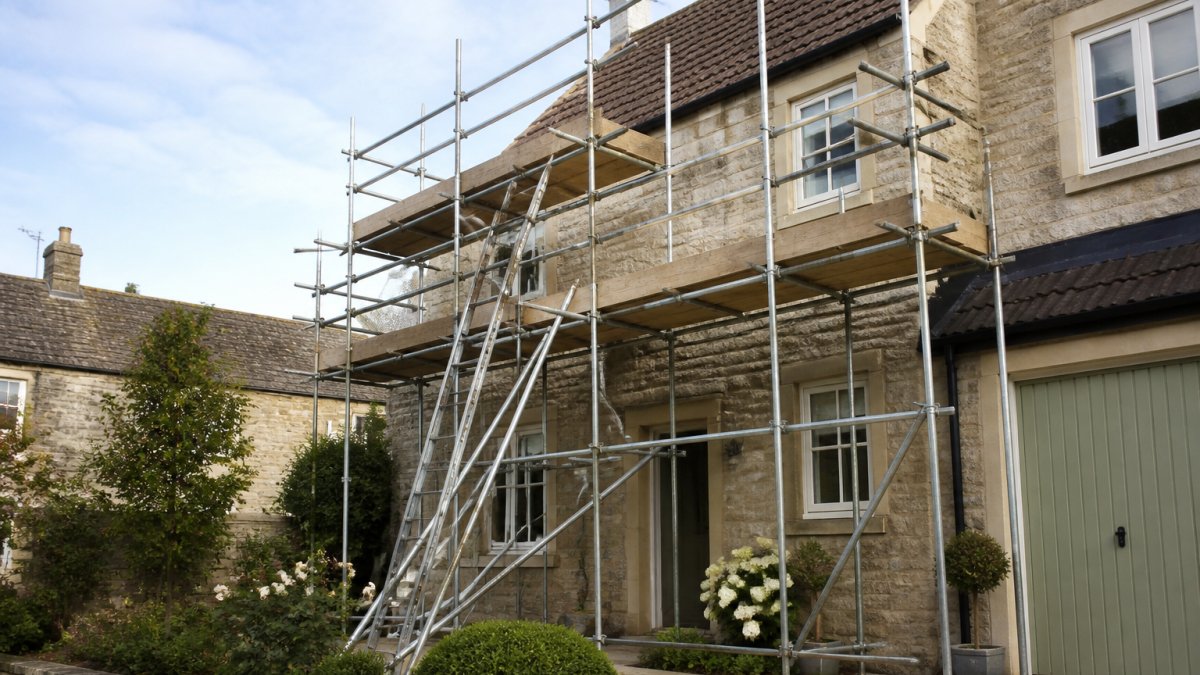
 blog
blog
Scaffolding Hire for Bath Homeowners: A Complete Guide
Table of Contents
- Scaffolding Hire for Bath Homeowners: What You Need to Know
- Types of Scaffolding Equipment and Scaffold Tower Options
- Scaffolding Hire Cost: What Affects Your Quote
- Scaffold Hire Duration: How Long Can You Keep Equipment?
- Scaffolding for Chimney Repairs and Roof Access
- Scaffolding Quote Checklist: Questions to Ask Before Hiring
- Why End-to-End Service Matters: Avoiding Subcontracting Delays
- Frequently Asked Questions
Last Updated: October 16, 2026
Scaffolding Hire for Bath Homeowners: What You Need to Know
When you're planning a major home repair or renovation in Bath, scaffolding hire for bath homeowners often becomes a critical decision. Whether you're tackling roof repairs, chimney work, or facade restoration on a period property, the right access equipment can mean the difference between a smooth project and costly delays.
At Able Scaffolding Bath, we've worked with hundreds of homeowners across the region over more than 35 years. The most common mistake we see is treating scaffolding as a commodity, picking the cheapest quote without understanding what you're actually getting.
This guide walks you through what scaffolding hire for bath homeowners actually involves: the equipment options, what affects your costs, how to ask the right questions before you commit, and why end-to-end service matters more than you might think. By the end, you'll know exactly what to look for when you compare quotes.
Types of Scaffolding Equipment and Scaffold Tower Options
Choosing the right equipment starts with understanding what's available and which setup suits your project. Not every job needs the same type of scaffolding, and the wrong choice can waste money or create access problems.
Alloy Scaffold Towers
An alloy scaffold tower is the most common choice for homeowner projects. These are modular, self-contained units that can be erected quickly and moved if needed. They're lightweight compared to traditional steel systems, which makes them easier to position in tight spaces, crucial if you're working on a narrow terraced street where access is already constrained.
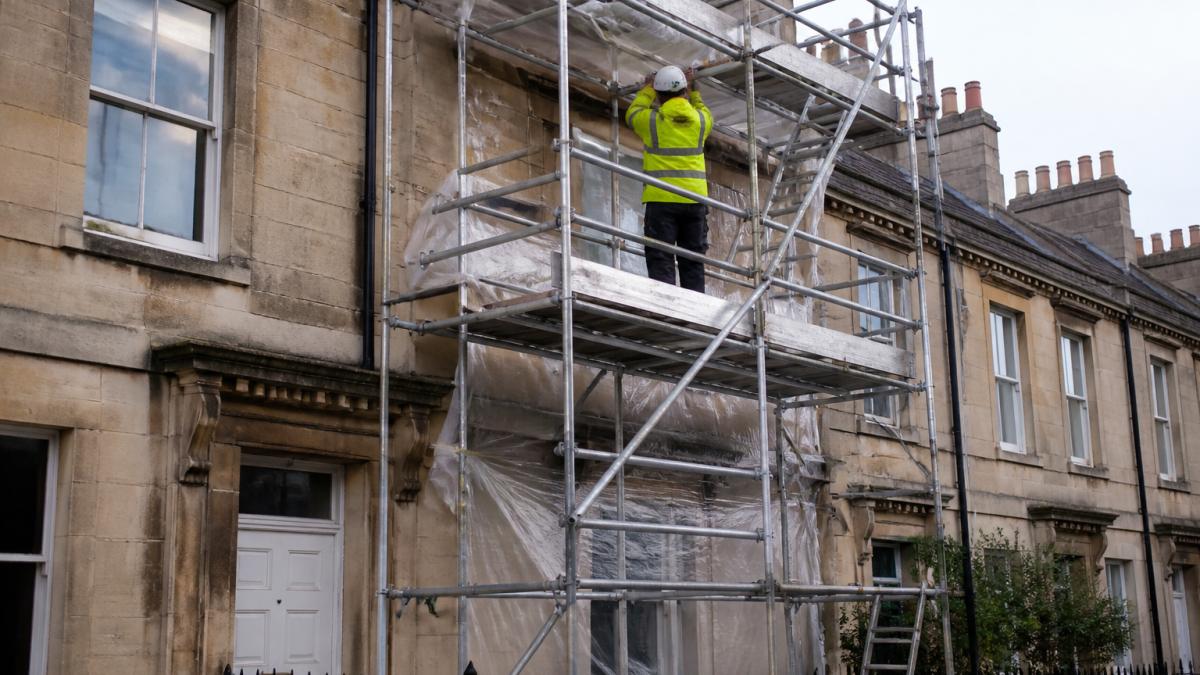
Alloy towers provide stable working platforms for roof repairs, painting, pointing, and chimney access. The modular design means you can adjust the height and configuration as your project evolves.
One thing to watch: alloy towers require a level, solid base. If your driveway or garden slopes significantly, or if the ground is soft, you may need adjustable props or additional stabilisation. A good scaffolder will assess this during the site visit and factor it into the setup cost.
System Scaffolding for Larger Projects
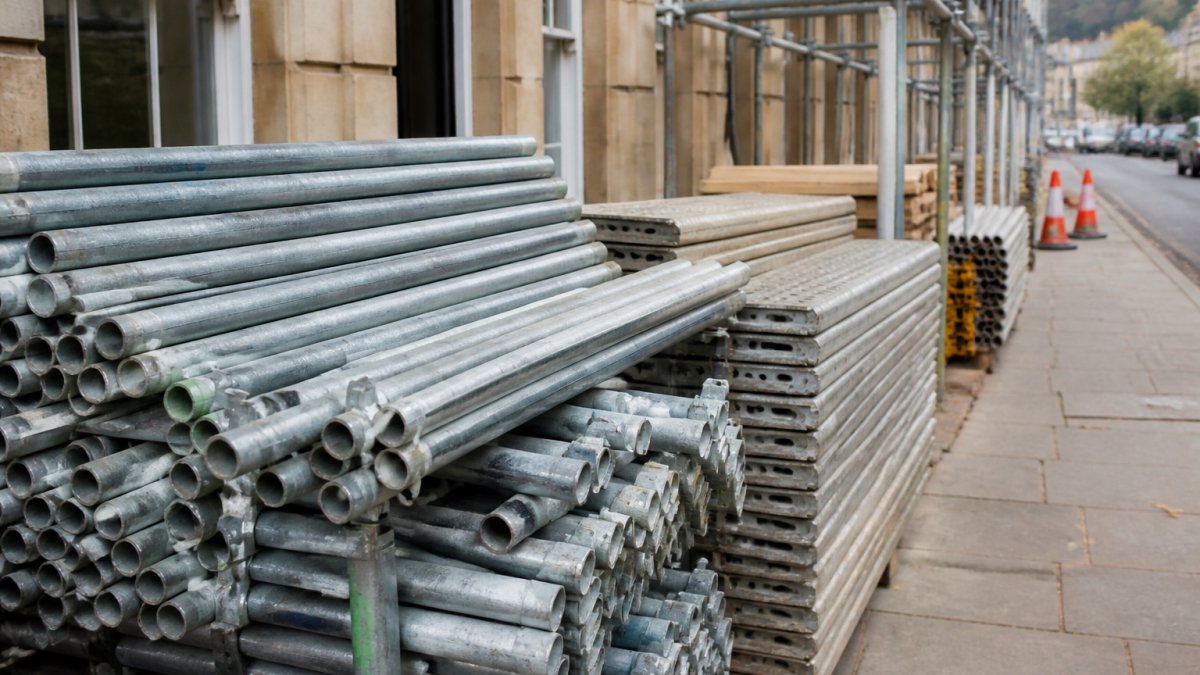
System scaffolding is the industrial-strength option. It uses steel tubes and couplers to create a fully integrated framework that can be customised to almost any shape or height. If you're renovating a large Victorian property, need to scaffold around complex architectural features, or require a temporary roof system, system scaffolding is often the answer.
System scaffolding provides greater flexibility and can handle heavier loads. It's also the standard choice when you need to protect period stonework or work around listed building constraints. Many Bath properties are Grade II listed or sit within conservation areas, which means your scaffolding setup must be planned carefully to avoid damage.
For most homeowners, system scaffolding can be a significant investment, but if your project is complex or involves significant stonework protection, it often proves to be a valuable solution.
Protecting Period Properties and Bath Stone
Bath stone is beautiful but fragile. The local limestone can be damaged by pressure, impact, or inappropriate fixing methods. If you own a period property, protecting the stonework during scaffolding erection is non-negotiable.
The standard approach is to use protective coverings, typically timber boards, plywood, or purpose-made protective pads, between the scaffolding and the stone. This distributes pressure evenly and prevents scuffing or chipping. For listed buildings, the scaffolding design itself may need to be approved by the local conservation officer, and the method of attachment (whether you can drill, bolt, or only use friction-based systems) will be specified.
We recommend discussing period property protection in detail when you request your quote. Ask whether the provider has experience with listed buildings in your area, and request a method statement showing exactly how they'll protect your stonework. This isn't just about preservation, it's about avoiding costly damage claims after the work is done.
Scaffolding Hire Cost: What Affects Your Quote
Scaffolding hire cost varies widely depending on several factors. Understanding what drives the price helps you compare quotes fairly and avoid nasty surprises.
The primary variables are: equipment type (alloy tower vs. system scaffolding), height and coverage area, hire duration, site access difficulty, and whether additional features like protective coverings or temporary roofing are needed.
Your location within or near Bath also matters. If you're on a steep hill, in a narrow medieval street, or in a conservation area, the scaffolder may need to spend extra time on site surveys, planning, or specialist techniques.
Site access is a major factor. If your street has limited parking, narrow pavements, or overhead power lines, the scaffolder needs more time to position equipment safely. Some providers charge extra for difficult access; others factor it into their standard quote.
Protective measures push costs up. If you're protecting Bath stone, you'll pay for additional materials and labour. If you need a temporary roof system (common for chimney repairs or when weather is unpredictable), that's a separate item.
Scaffold Hire Duration: How Long Can You Keep Equipment?
Scaffold hire duration is typically charged on a weekly basis. Most homeowner projects require a few weeks, though complex jobs can stretch longer.
Understanding what's included in your hire period matters. Some providers charge a flat weekly rate regardless of when the equipment arrives or leaves within that week. Others charge pro-rata for partial weeks.
Extensions are common. If your contractor runs behind schedule or weather delays the work, you'll need to extend the hire. Good providers build flexibility into their terms and offer reasonable rates for extensions. Clarify this before you sign the agreement.
Weather is a legitimate reason for delays. If heavy rain or high winds prevent work, some scaffolders will extend your hire period. Ask whether this protection is included in your quote.
One practical tip: if you're coordinating multiple trades (plasterers, roofers, decorators), try to schedule them efficiently so you're not paying for scaffolding while waiting for the next contractor to arrive. A good scaffolder can advise on realistic timelines based on the work involved.
Scaffolding for Chimney Repairs and Roof Access
Chimney repairs and roof work are among the most common reasons homeowners hire scaffolding. Both require safe, stable access to the roof edge, and both are areas where poor planning can lead to accidents or damage.
Free, no-obligation quotations →
For chimney repairs, you typically need a scaffold tower or system scaffold positioned to give access to the chimney stack. The height depends on your roof pitch and the chimney's position.
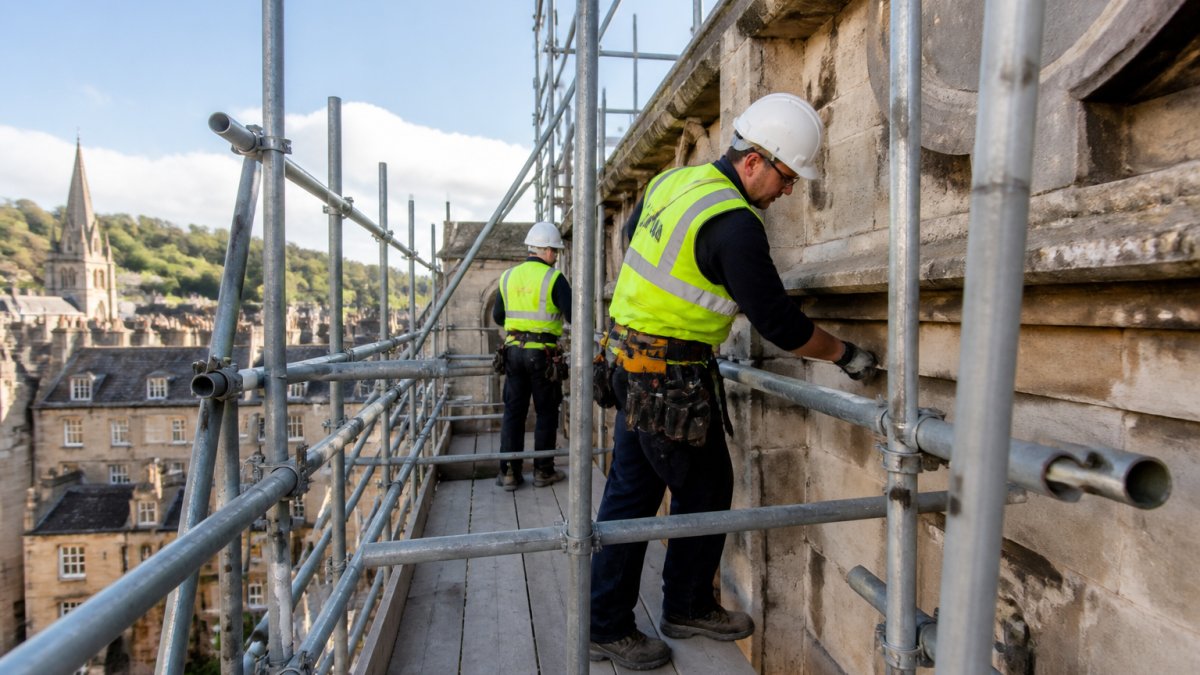
Roof repairs, whether slate replacement, lead valley work, or tile repairs, follow a similar pattern. The scaffolding must provide a safe working platform at eaves height, with guard rails and toe boards to prevent falls.
Both types of work often involve protective measures. If you're working on a listed building or a property with original materials, the method of access and any temporary fixings must be approved beforehand. Lead work, in particular, requires careful planning to avoid contaminating the property or the surrounding area.
A responsible scaffolder will spend time on site planning to ensure the setup is safe and appropriate for the work.
Scaffolding Quote Checklist: Questions to Ask Before Hiring
Getting a good quote means asking the right questions. Here's what to cover before you commit.
What Hire Includes: Erection, Inspection, and Dismantling
Ask exactly what's included in the hire price. Does it cover erection and dismantling? Who handles inspection and certification? What happens if alterations are needed mid-project?
A transparent provider will break down the quote into labour (erection and dismantling), equipment hire, and any additional services like protective coverings or inspections. Some providers include a basic inspection as part of the service; others charge separately. For scaffolding, a formal inspection is often required by law, and the cost should be clear upfront.
Dismantling is as important as erection. Ask whether the provider handles full removal and site clearance, or whether they'll leave you with materials to dispose of. A complete service includes taking the scaffolding away and leaving your site clean.
Local Delivery and Access Considerations
Confirm that the provider has experience delivering to your specific area. Bath's narrow streets, terraced properties, and conservation areas create unique challenges. Ask whether they've worked on your street or nearby, and request details of how they'll manage access.
If your property is on a steep hill, in a cul-de-sac, or has restricted parking, discuss this explicitly. Some providers have smaller vehicles or modular equipment for tight spaces; others don't. Knowing this before you book prevents last-minute surprises.
Ask about delivery dates and times. Can they deliver on a specific day? Do they need to block the street? Will they notify your neighbours? These details matter for your relationship with the community and for coordinating with your contractors.
Safety, Permissions, and Your Responsibilities
Clarify who's responsible for permits and notifications. In most cases, the scaffolder handles this, but it's worth confirming. If your property is listed or in a conservation area, planning permission or conservation officer approval may be needed (Historic environment). A good provider will advise whether this is required and factor any delays into the timeline.
Ask about insurance. The scaffolder should carry public liability and employer's liability insurance. Request a copy of their certificate before they start work. If you're hiring multiple contractors, confirm that everyone's insurance covers the shared use of scaffolding.
Your responsibilities include ensuring safe access to the site, protecting the scaffolding from damage, and not overloading it beyond its rated capacity. Ask the provider to explain these during the site visit so there's no confusion.
Why End-to-End Service Matters: Avoiding Subcontracting Delays
One of the biggest frustrations homeowners face is subcontracting. A scaffolder takes your job, then passes it to another company for erection, and a third company for dismantling.
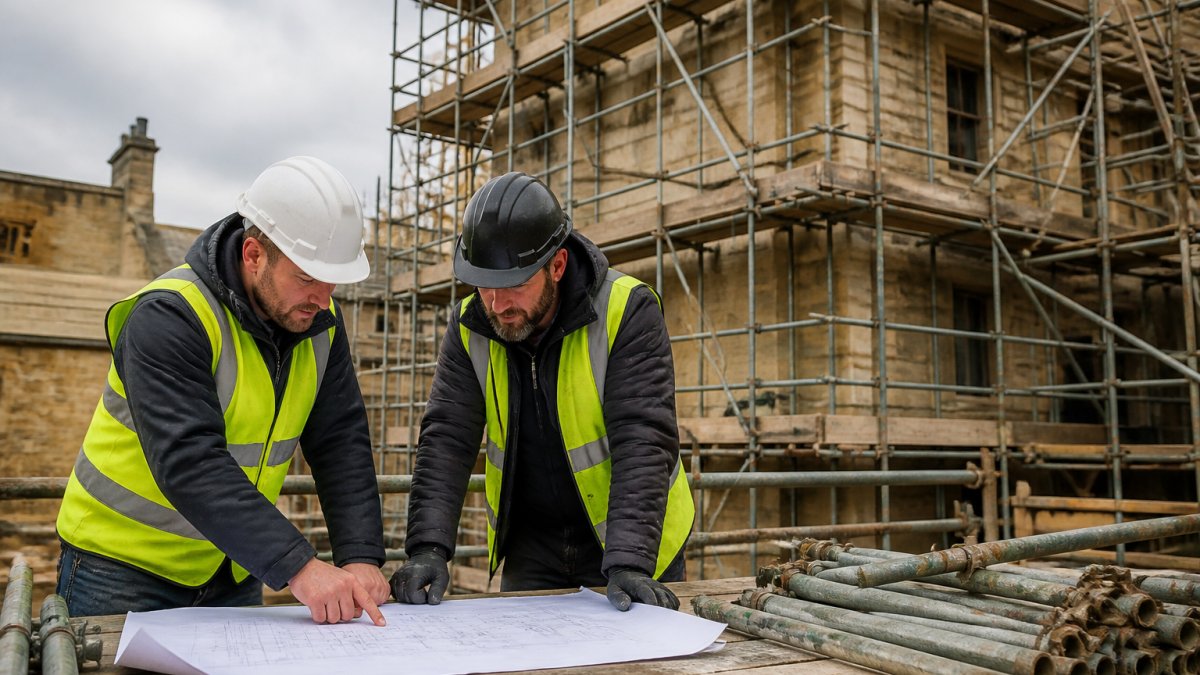
At Able Scaffolding Bath, we handle the entire process ourselves: site survey, design, erection, inspection, and dismantling. This means you have one point of contact throughout, and we're accountable for every stage.
This approach also improves communication. When the same team surveys your property, plans the setup, and erects the scaffolding, they understand your specific constraints and can adapt if needed.
End-to-end service can provide significant value over the course of the project. You're paying for reliability and accountability, not just equipment.
Scaffolding hire for bath homeowners doesn't have to be complicated. The key is asking the right questions upfront, understanding what you're paying for, and choosing a provider who takes responsibility for the entire job.
At Able Scaffolding Bath, we provide free, no-obligation quotations tailored to your specific project. We'll survey your property, explain exactly what's involved, and give you a clear price with no hidden costs.
Frequently Asked Questions
What affects the cost of scaffolding hire for a home project?
Several factors determine your scaffolding hire cost: the height and size of the tower needed, the type of equipment (alloy tower versus system scaffolding), hire duration, site access complexity, and whether protective measures are required for period properties. Local delivery distance, ground conditions, and the time needed for erection and dismantling also influence the final quote. Request an itemised quote from your scaffolder to understand each cost element and compare fairly between providers.
How long can I hire scaffolding for?
Hire periods are flexible and depend on your project needs. You can hire for the duration required for your renovation or repair timeline. Weather delays, contractor scheduling changes, and permit requirements may affect your actual duration. Discuss your expected scaffold hire duration upfront and confirm whether extensions are available.
Do I need permission to put scaffolding on a public pavement?
Yes. Scaffolding that extends onto a public pavement often requires a licence from your local authority. Your scaffolder should advise on and arrange this as part of their service. This is particularly important in Bath's narrow terraced streets where pavement space is limited. Confirm that your scaffolding provider handles all necessary permits and licences before work begins.
Why should I choose a scaffolder who does their own erection and dismantling rather than subcontracting?
When your scaffolder owns equipment, transport, and crews, you avoid delays caused by subcontractor scheduling, unclear responsibility when problems arise, and inconsistent quality. A single team managing erection, inspections, and dismantling ensures accountability, faster response times, and continuity. For sensitive period properties in Bath, having the same experienced team throughout the project reduces the risk of damage and ensures your specific site constraints are respected from start to finish.