 how-to
Protecting Stonework on Listed Buildings: A How-To Guide
Table of Contents
- Understanding Listed Building Status and Stone Protection Requirements
- Step 1: Inspect and Identify Your Stone Type and Condition
- Step 2: Obtain Listed Building Consent for Stone Cleaning
- Step 3: Plan Access and Protect Stone Walls During Building Work
- Step 4: Safe Cleaning Methods for Stone on a Listed Building
- Step 5: Historic Stonework Repair and Conservation
- Step 6: Maintenance and Monitoring After Work Is Complete
- Common Mistakes to Avoid When Protecting Listed Stonework
- Frequently Asked Questions
Last Updated: October 18, 2026
Understanding Listed Building Status and Stone Protection Requirements
If your property is listed, every repair decision carries weight: your stonework is a protected part of the nation's heritage. This guide from Able Scaffolding Bath covers the practical steps to protect stonework on listed buildings, from inspection through to long-term maintenance.
The law is clear: you cannot alter a listed building without consent, including cleaning, repairing, or even protecting stonework. Followed properly, the rules ensure your repairs last and don't damage what came before.
Scaffolding and repair work are not straightforward on listed buildings. Access must be planned around sensitive masonry, materials must be compatible with original stone, and cleaning methods matter enormously. Get them wrong and you've accelerated decay, not slowed it.
Step 1: Inspect and Identify Your Stone Type and Condition
Before you touch anything, identify your stone type, then diagnose what's happening to it. Bath stone weathers differently from granite; limestone deteriorates in ways sandstone doesn't.
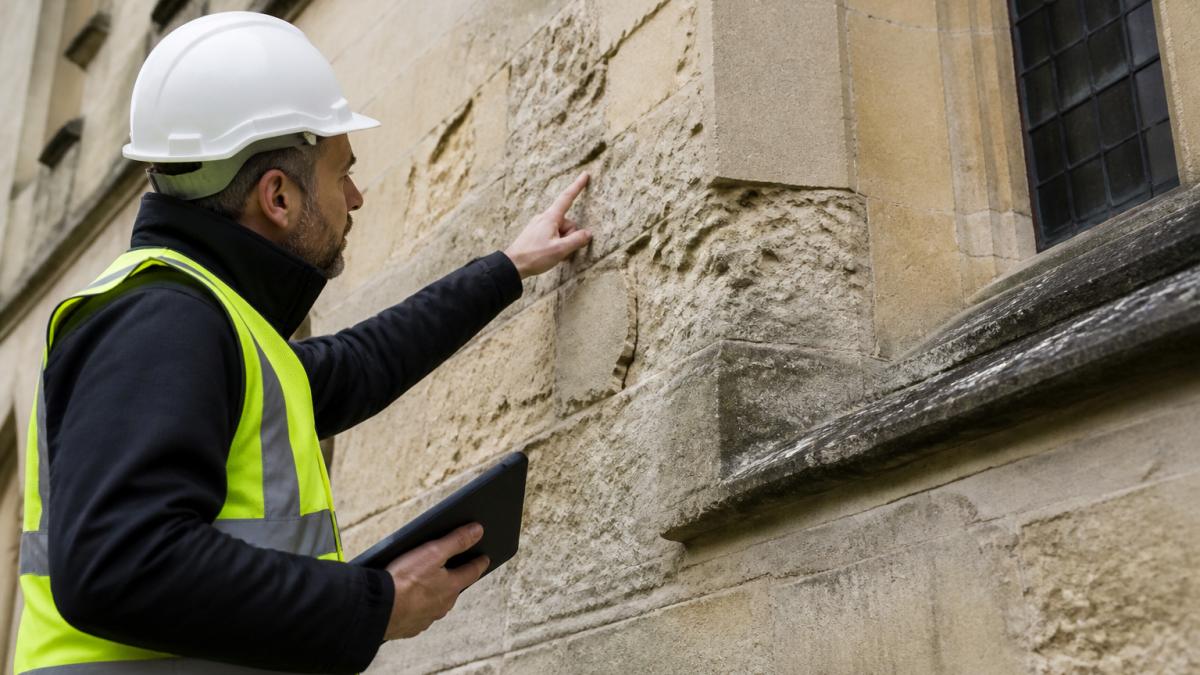
Distinguishing between common building stones
Most listed buildings in the region use one of four stone types. Each has distinct characteristics.
Bath stone is a fine-grained, relatively soft limestone, warm in colour and predictable in weathering.
Sandstone is coarser and more porous, absorbing water readily and developing a dark crust from pollution.
Granite is hard and dense, resisting weathering but absorbing no water, so moisture runs down the surface.
Slate appears in roofing and sometimes lower courses. Extremely durable, it splits along natural planes and is vulnerable to frost damage if water gets behind it.
Diagnosing deterioration and its causes
Stone fails for specific reasons; identifying the cause tells you how to fix it.
Frost damage appears as spalling (flaking or scaling) when water freezes inside the stone and breaks it apart.
Salt damage creates a white crust or powdery surface.
Biological growth, algae, lichen, moss, colonizes damp stone. It traps moisture, accelerates decay, and obscures the stone beneath, making assessment harder.
Mortar failure is the most common issue.
Document what you see: photograph the worst-affected faces and note whether the problem is spreading.
Step 2: Obtain Listed Building Consent for Stone Cleaning
Cleaning stonework on a listed building requires consent. Many owners assume cleaning is maintenance and needs no permission. It does.
When consent is required and what triggers it
You need listed building consent for any work that alters the appearance or fabric of the building, including:
- Cleaning stonework by any method
- Repointing mortar joints
- Repairing or replacing stone
- Installing protective barriers or weatherproofing
- Removing paint, render, or limewash
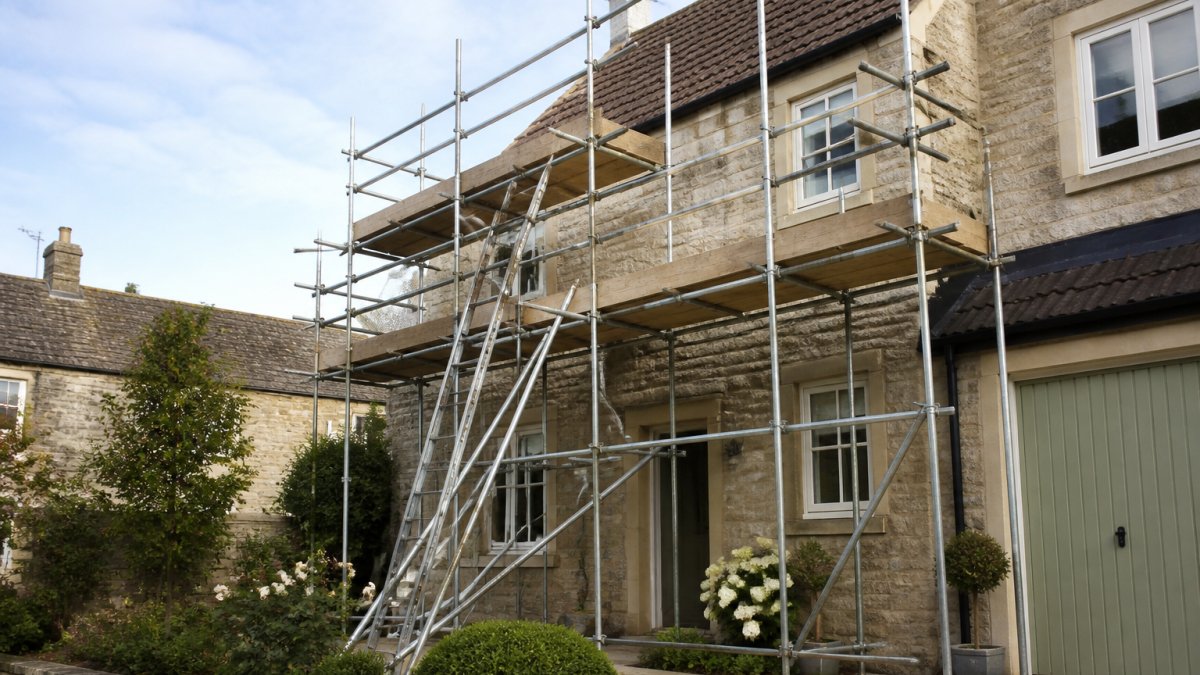
- Installing temporary structures like scaffolding in place for more than a few weeks
You do NOT need consent for:
- Routine maintenance like clearing gutters
- Emergency work to prevent immediate danger (though you must notify the local authority within 48 hours)
- Like-for-like replacement of small damaged areas
The rule: if it changes how the building looks or alters its historic fabric, you need consent first.
How to apply and what to expect
Contact your local planning authority, usually your council's conservation team, which holds the listed building register and manages consent applications.
Prepare these documents:
- Photographs of the current condition
- Detailed description of the proposed work
- Method statement explaining how you'll do it
- Details of materials (mortar type, stone source, cleaning method)
- Drawings or plans showing affected areas
- Quotes or specifications from contractors
The authority assesses your application against conservation principles, checking that you're not damaging historic fabric and that repairs use compatible materials.
Decisions typically take 8-12 weeks; some are approved quickly, others referred to specialists or the relevant heritage body. If refused, you can appeal or revise your proposals.
Don't start work before consent is granted. Working without it is a criminal offense and can result in prosecution (Unauthorised Works and Listed Building Enforcement).
Step 3: Plan Access and Protect Stone Walls During Building Work
Protecting stonework on listed buildings during access and repair work requires careful planning. Scaffolding, temporary roofs, and protection systems can cause as much damage as the original problem if poorly designed.
Choosing appropriate scaffolding and protection systems
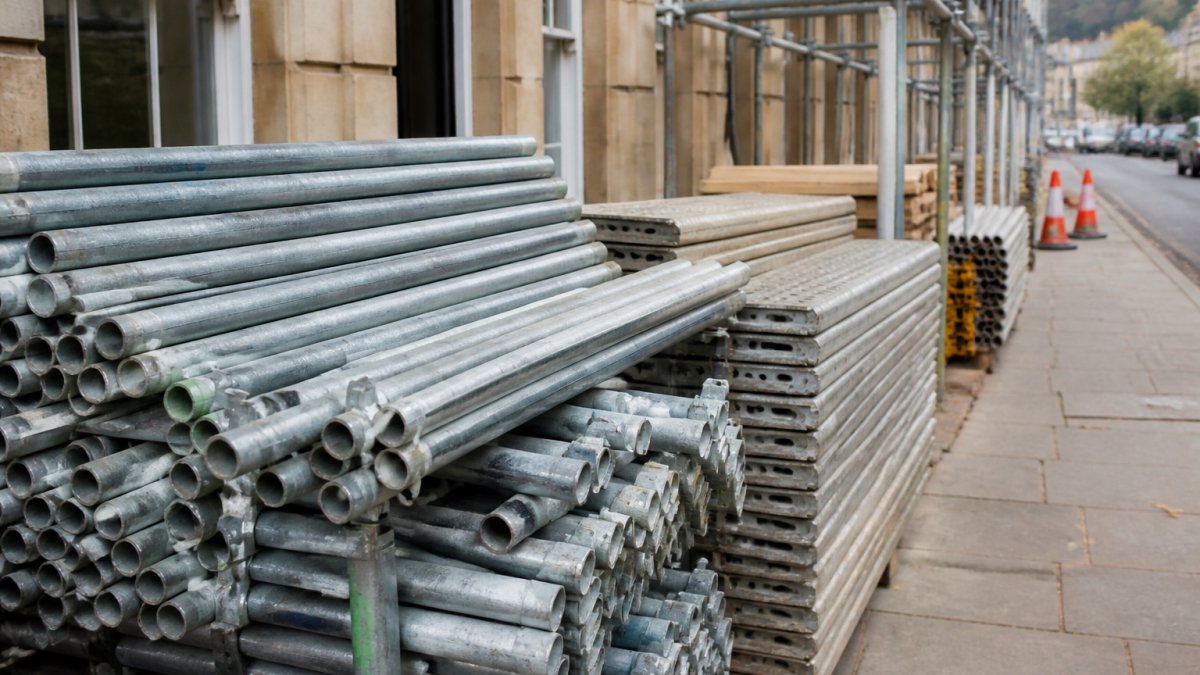
Standard steel scaffolding can damage soft stone like Bath stone. The poles and fittings leave marks. Tie-in points create holes. Pressure from fittings can crush edges.
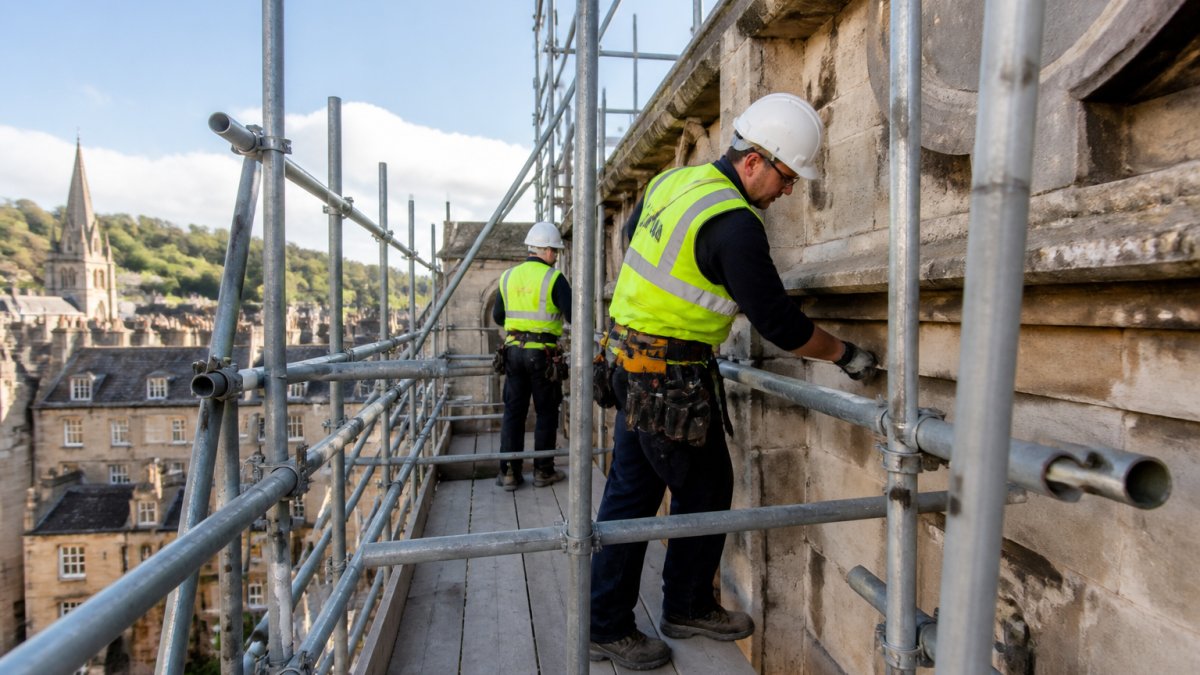
Work with a scaffolding company that understands heritage buildings. At Able Scaffolding Bath, we design access around the building's constraints.
For listed buildings, specify a company with heritage experience. Ask for references and how they protect stone. This isn't a standard job.
Temporary roofs keep rain out during stone repair work. Make sure your system:
- Doesn't create new water ingress points
- Allows the building to breathe (don't seal it completely)
- Is designed to be removed without leaving marks or damage
- Includes proper drainage so water doesn't pool
Installing protective barriers and weatherproofing
Once scaffolding is in place, protect the stonework beneath. Use:
- Breathable membranes (not plastic sheeting, which traps moisture)
- Soft protective wrapping around poles and fittings
- Plywood or boards to shield ground-level stone from impact
- Proper drainage channels to direct water away from the wall
The goal is to prevent water ingress while allowing moisture to escape. Sealing the building completely traps moisture inside and causes more damage than the original problem. Plan protection before work starts, brief contractors on what's off-limits, mark sensitive areas, and check protection daily during wet weather.
Step 4: Safe Cleaning Methods for Stone on a Listed Building
Not all cleaning methods are safe for historic stonework. Some cause irreversible damage and accelerate decay rather than slow it.
Approved techniques and methods to avoid
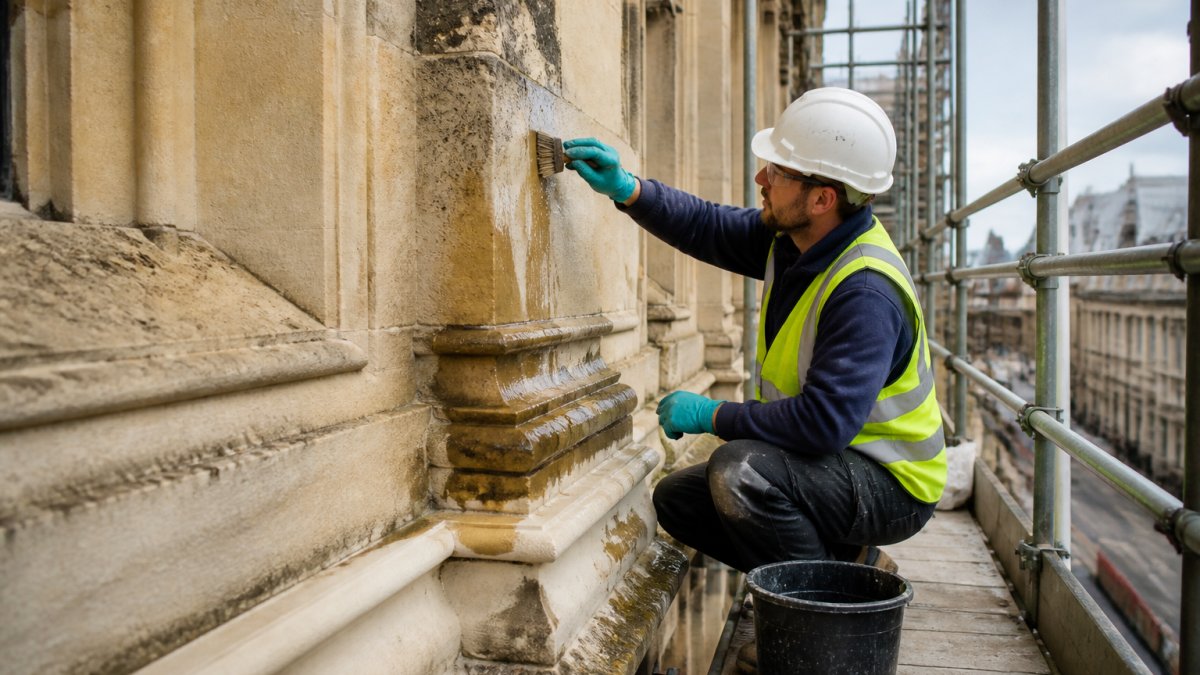
Water cleaning is safest: low-pressure water with soft brushes removes surface dirt without damaging stone. Use deionized or distilled water if possible, as tap water can leave deposits.
Free, no-obligation quotations →
Lime poultices draw out salts and stains. Slow but effective for heavily soiled stone, they're labour-intensive and less common now.
Gentle chemical cleaning with pH-neutral cleaners can work, provided the cleaner suits the stone type and is thoroughly rinsed away.
Methods to avoid entirely:
- High-pressure water jetting blasts stone apart, especially soft stones like Bath stone, driving water deep into the masonry and causing frost damage later.
- Grit blasting or sandblasting removes the outer layer of stone irreversibly and accelerates weathering.
- Acidic cleaners dissolve stone and mortar, damaging the surface and leaving salts behind.
- Abrasive methods like wire brushing damage the surface and leave embedded metal particles that rust.
- Biocides kill biological growth but can damage stone and leave toxic residues.
The simplest approach is often best: start with water and soft brushing, and consult a conservation specialist before trying anything stronger.
Testing before full application
Always test your chosen method on a small, inconspicuous area first. Leave it for a few weeks. Check for:
- Discolouration or staining
- Surface damage or erosion
- Salt crystallization
- Water ingress or damp patches nearby
Only if the test area looks good should you proceed to the full building. Document the test with photographs. Keep records of what you used and how it performed.
Step 5: Historic Stonework Repair and Conservation
When stone is damaged, repair decisions are critical: wrong materials accelerate decay, compatible ones can last centuries.
Choosing compatible repair materials and lime mortar
Lime mortar is the only appropriate choice for historic masonry. Softer than the stone it binds, it fails first under stress, protecting the original stone, and allows moisture to move through rather than trapping it.
Lime mortar must match the original in:
- Lime type (hydraulic or non-hydraulic)
- Sand composition and colour
- Aggregate size
- Strength (weaker is often better for historic work)
Source and analyze samples of the original mortar if possible, and match as closely as you can.
For stone replacement, source stone matching:
- Type and colour
- Texture and weathering
- Grain size and orientation
- Historic tool marks if visible
Matching stone is difficult and expensive, which is why repointing is often better than replacing stone.
Materials to avoid and why
Cement-based mortar is the most common mistake. Modern sand-cement mortar is harder than historic stone, so when the building moves slightly, it doesn't flex and forces the stone to crack.
Hard capping with cement or other rigid materials traps water on exposed wall tops, which seeps underneath and causes frost damage.
Impermeable sealers trap moisture inside the stone, creating a barrier that looks clean but causes damage beneath the surface.
Incompatible stone, granite to repair sandstone, or modern stone to repair historic stone, creates a weak boundary where water gets trapped.
Step 6: Maintenance and Monitoring After Work Is Complete
Protecting stonework on listed buildings doesn't end when the scaffolding comes down. Ongoing maintenance and monitoring prevent recurrence.
Inspect twice a year, ideally in spring and autumn. Look for:
- New cracks or movement
- Water ingress or damp patches
- Mortar joint failure
- Biological growth
- Spalling or erosion
Record what you find, photograph problem areas, and document changes over time to spot trends early.
Clear gutters and downpipes regularly. Ensure water drains away from the building. Fix any leaks promptly. Most stonework problems start with water.
Avoid piecemeal pointing or repairs, which create weak boundaries. If repointing is needed, repoint entire wall elevations or complete sections.
Monitor the mortar you've used.
Common Mistakes to Avoid When Protecting Listed Stonework
Most damage to listed buildings happens through good intentions backed by poor choices.
Mistake 3: Sealing the building. Sealers and waterproofing trap moisture. Historic buildings are designed to breathe, let them.
Mistake 4: Skipping consent. Some owners do work quietly to avoid the process. Consent protects the building and you legally.
Mistake 5: Ignoring water. Water causes most stonework failure.
Mistake 6: Using the wrong scaffolding company. Standard scaffolding damages soft stone; heritage work requires specialist knowledge. Able Scaffolding Bath has 35 years of experience protecting Bath stone and period properties, designing access around the building's constraints.
Mistake 7: Rushing repairs. Historic buildings have survived centuries and can wait for the right solution.
If you're planning scaffolding, access, or repair work on a listed building, get professional advice. Able Scaffolding Bath has worked on heritage projects across the region and knows how to deliver access without damage. Get a free, no-obligation quotation and let's discuss how to protect your building properly.
Frequently Asked Questions
Does stone cleaning on a listed building require consent?
Yes, in most cases. Listed building consent is required before cleaning stonework on a listed building, even if the work seems minor. The local planning authority assesses whether the proposed cleaning method will damage the historic fabric. Some gentle methods like low-pressure water washing may be approved, while others like sandblasting are typically refused. Always contact your local planning authority before starting any cleaning work to avoid enforcement action.
How do you protect stonework on a listed building during scaffolding?
Use specialist scaffolding with protective barriers. Ensure all contact points are padded to prevent chipping and abrasion. Install temporary roofing or weather protection to prevent water ingress behind the scaffold. Work with a scaffolding provider experienced in heritage properties who understands the constraints of protecting historic fabric and can plan access around the building's architectural features.
What materials should be avoided when repairing historic stonework?
Avoid hard cement-based mortars, which trap moisture and are incompatible with softer historic stones. Cement-based renders and pointing will cause damage over time. Use lime-rich mortars and lime-based finishes instead, which allow the stone to breathe and flex naturally. Do not apply modern sealants or impermeable coatings, as these prevent moisture escape and accelerate decay. Always match the composition and strength of original materials to preserve the historic fabric.
What is the safest way to clean historic stonework?
Start with the gentlest method: soft-bristle brushing with water or mild detergent. Test any cleaning solution on a small, inconspicuous area first. Low-pressure water washing (under 80 bar) is often approved for listed buildings. Avoid high-pressure jets, sandblasting, and chemical strippers, which damage the stone surface irreversibly. Always obtain listed building consent before cleaning and follow the advice of your local planning authority or a conservation specialist.