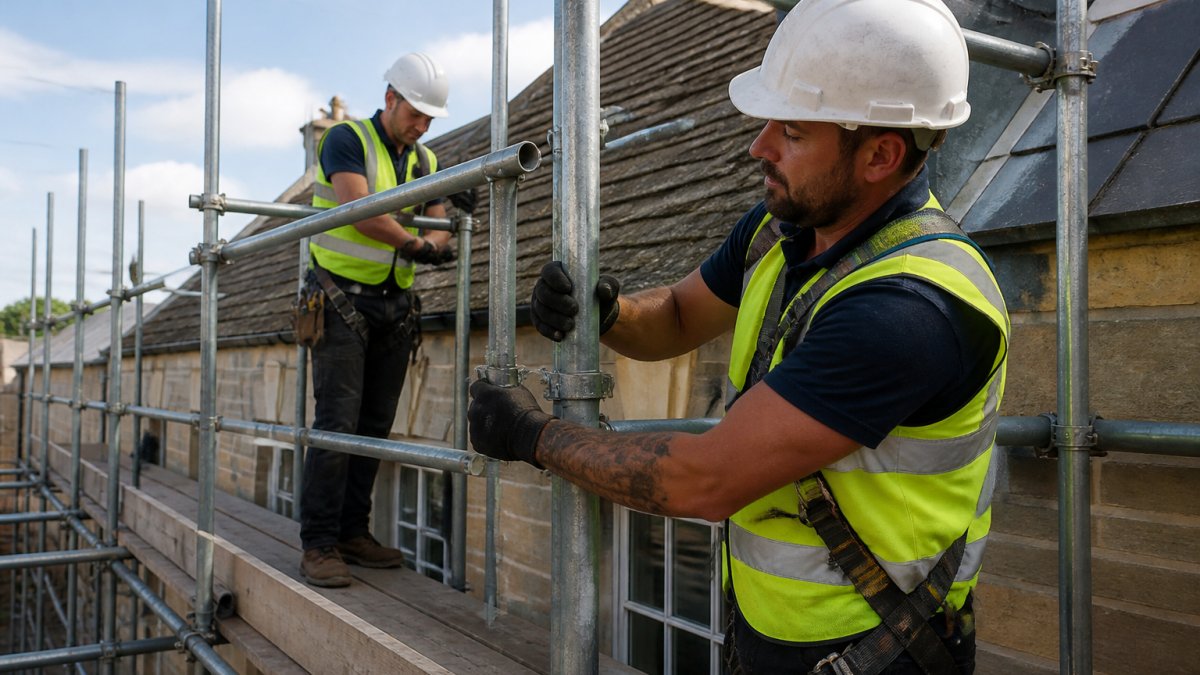
 listicle
Benefits of Hiring Direct Scaffolding Crews
Table of Contents
- What Direct Scaffolding Crews Offer
- Labour-Only Scaffolders: Control Without the Middleman
- Scaffolding Safety and Inspections: Direct Accountability
- Scaffolding Erection and Dismantling Time: Speed and Predictability
- Understanding Scaffolding Hire Costs With Direct Crews
- Why Project Delays Drop When You Hire Direct
- Conclusion
- Frequently Asked Questions
Last Updated: October 19, 2026
What Direct Scaffolding Crews Offer
Hiring direct scaffolding crews means working with the team that will actually erect, maintain, and dismantle your scaffolding, without a middleman taking a cut or passing responsibility elsewhere. Hiring direct crews can give you control, accountability, and predictability that subcontracted labour doesn't deliver.
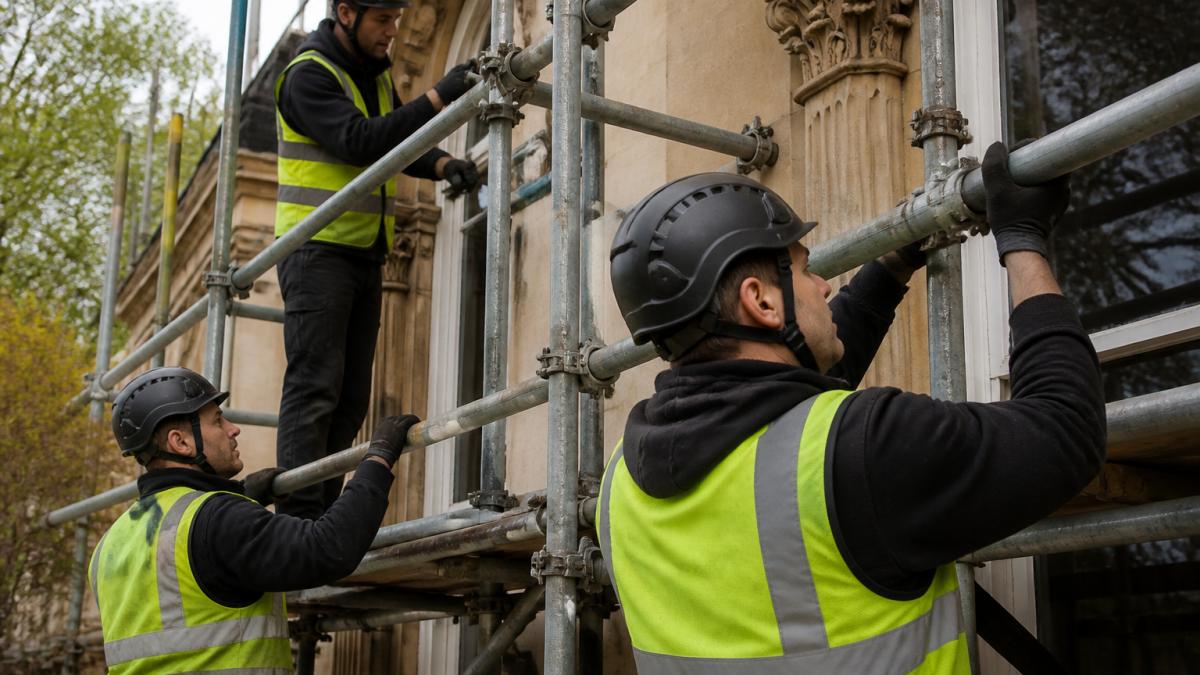
The core benefit: accountability stops with the crew you hired. If something goes wrong, a delay, poor workmanship, safety concern, you're not waiting for a middleman to contact their contact to fix it. This matters enormously on time-sensitive projects or heritage properties where precision is non-negotiable.
Direct crews also bring continuity. The same people who assess your site, plan the layout, and erect the structure inspect it daily and dismantle it at the end, so they understand your building's quirks, access constraints, and timeline.
Labour-Only Scaffolders: Control Without the Middleman
Labour-only scaffolders are qualified professionals hired directly to provide the labour for your scaffolding project. You control the timeline, specifications, and execution; they provide the skilled hands and expertise.
The trade-off is coordination: you take on responsibility for materials arriving on time, site conditions being ready, and the crew having what it needs to work safely. That is manageable if you have run construction projects before; if not, decide early whether a fuller service is a better fit.
What separates a good labour-only engagement from a bad one is vetting. Confirm each scaffolder's qualifications and card scheme status, and check that the card is in date and matches the work being done. Ask for evidence of experience on your specific project type, whether heritage stonework, temporary roofing, or complex access.
Responsibility boundaries need to be agreed in writing before work starts, because labour-only arrangements leave several things ambiguous by default.
Matching crew size and experience to the project is the other decision that determines whether labour-only works for you. Access complexity, height, site constraints, project duration, and changing work phases should all drive the choice.
Labour-only is not the right model for everyone. If you do not want to coordinate materials, design, and supervision, a full-service arrangement shifts those responsibilities to the contractor, at a price. The value of labour-only is control and transparency, but only if you exercise that control through proper vetting, written boundaries, and realistic crew selection.
Scaffolding Safety and Inspections: Direct Accountability
Safety isn't negotiable on any scaffolding project. When you hire direct scaffolding crews, accountability for safety sits directly with them and with you as the project owner.
A qualified scaffolding crew should conduct daily visual inspections of the structure, checking for loose fittings, damaged components, and any signs of movement or stress. On longer projects, they should also arrange formal inspections by a competent person trained to assess scaffolding systems for compliance with relevant regulations (Scaffolding).
The Health and Safety at Work etc. Act 1974 and the Work at Height Regulations 2005 set the legal framework for scaffolding safety in the UK. Your crew should be familiar with these requirements and operate within them. When you hire direct, you can ask to see their safety protocols, inspection records, and evidence of compliance. With a middleman, that transparency often gets lost.
Direct crews also mean consistent safety culture. The same people working on your site every day develop habits and routines around safety. They know the hazards specific to your building, the narrow street access, the period stonework that chips easily, the weather exposure. They adapt their practices accordingly rather than following a generic checklist.
Fall protection, proper harnesses, and secure anchor points aren't optional extras, they're baseline requirements. A professional crew will have their own equipment and maintain it to standard. You should never see a scaffolder working at height without proper protection.
Scaffolding Erection and Dismantling Time: Speed and Predictability
The erection and dismantling phases are where direct crews show their value most clearly. These are the phases that disrupt your site, affect your neighbours, and tie up your budget.
A direct crew has no incentive to drag out the work. They're paid for the job, not for hours on site. If they can erect your scaffolding in three days instead of five, they will. That speed means less disruption, lower labour costs, and faster access to the work underneath.
Dismantling follows the same logic. Once your project is complete, the crew removes the scaffolding quickly and efficiently. For businesses on high streets or in residential areas, every day the scaffolding is up is a day customers think you're closed or neighbours deal with the inconvenience.
Predictability comes from direct communication. You agree dates, times, and phasing with the crew you hired. They're not coordinating with three other projects or waiting for equipment to be shuttled between sites. If weather delays the erection by a day, you hear it directly and can adjust your timeline accordingly.
The actual speed depends on the complexity of the structure. A simple facade scaffold on a terraced house might take one or two days. A complex temporary roof system over a heritage building might take longer. A direct crew will give you realistic timelines based on their experience with similar projects.
Free, no-obligation quotations →
Understanding Scaffolding Hire Costs With Direct Crews
Most articles about scaffolding costs talk vaguely about saving money. What they rarely do is show you how a direct crew's pricing is built, so you can estimate a total before you commit. Asking for a breakdown is the single most useful thing when comparing crews.
Direct crew pricing normally falls into one of three structures. Hourly rates suit small, uncertain jobs where the scope may shift, but expose you to cost creep if the work runs long.
Beyond the headline rate, several components determine the real total. Minimum call-outs matter: many crews apply a minimum charge, often a half-day or full-day equivalent, even if the job finishes early, so a small repair visit can cost more than the labour hours suggest.
Equipment and transport are the biggest source of confusion in labour-only arrangements. A labour-only crew typically supplies its own hand tools, harnesses, and personal protective equipment, but not the scaffold tubes, boards, fittings, or system components. Those are either supplied by you or hired from a specialist supplier, and the hire charges, delivery, and collection sit on your account.
A worked example makes the structure clearer. For a straightforward two-storey facade scaffold on a terraced property, a common pattern is a crew of three working one to two days, charged at a day rate per scaffolder, plus a mobilisation charge, plus separate material hire.
Finally, protect yourself against the two costs that catch people out. First, programme overrun: if your building work runs longer than planned, the crew's labour charges extend with it, so agree in advance how additional days are priced and whether a standby or remobilisation charge applies.
Why Project Delays Drop When You Hire Direct
Direct scaffolding crews eliminate the coordination failures that plague subcontracted work. With a middleman, delays multiply: the broker has to contact the crew, the crew has to coordinate with other jobs, and decisions take longer to make and implement.
With a direct crew, you have one point of contact and one team accountable for delivery. If your schedule changes, you communicate directly with the crew, and they adjust. If a safety concern arises, the crew addresses it immediately rather than escalating through layers.
Continuity reduces delays. The same crew that planned your scaffolding is the one erecting it. They've already solved the problems, how to protect the period stonework, how to manage access on a narrow street, how to work around existing utilities. They don't have to relearn the site or re-explain constraints to a different team.
Direct crews also have skin in the game. Their reputation depends on delivering on time and to standard. A subcontracted crew working for a broker has less incentive to prioritise your project over others in the pipeline. A direct crew you hired has everything to gain from your satisfaction and everything to lose from failure.
Communication patterns matter too. You can call your crew directly if something changes, or visit the site and discuss adjustments face-to-face. That real-time problem-solving prevents small issues from becoming schedule-breaking problems.
Conclusion
Hiring direct scaffolding crews gives you control, accountability, and clarity that subcontracted labour doesn't provide. You work with the team doing the work, not with a middleman managing multiple jobs. Safety responsibility is direct. Costs are transparent. Timelines are predictable.
At Able Scaffolding Bath, we operate this way by design. We maintain our own equipment, employ our own crews, and deliver projects from quote to final dismantle without passing your job between companies. That seamless service is built on direct accountability and 35 years of experience with this region's specific challenges: period properties, narrow streets, heritage constraints, and complex access solutions.
If you're planning a scaffolding project and want a team that takes direct responsibility for the outcome, contact Able Scaffolding Bath for a free, no-obligation quotation. We'll assess your site, explain exactly what's involved, and give you a clear picture of timeline and cost, with no surprises and no middleman between you and the crew doing the work.
| Aspect | Direct Crews | Subcontracted Labour |
|---|---|---|
| Accountability | Direct to you | Through middleman |
| Communication | Direct contact | Mediated |
| Timeline clarity | Clear and direct | Subject to broker delays |
| Cost transparency | Labour costs visible | Markup included |
| Safety responsibility | Crew and you | Distributed responsibility |
| Continuity | Same team throughout | Possible crew changes |
Key Takeaways on Direct Scaffolding Crews:
- Direct crews eliminate the middleman and give you one point of accountability
- Labour-only scaffolders provide expertise without company overhead
- Safety inspections and compliance are direct responsibilities
- Erection and dismantling happen faster with crews motivated to complete work efficiently
- Transparent cost structure means no hidden markups or surprise charges
- Direct communication prevents delays and keeps projects on schedule
Frequently Asked Questions
What is the main benefit of hiring direct scaffolding crews instead of using a scaffolding hire company?
Direct scaffolding crews eliminate the middleman, meaning one accountable team manages your entire project from start to finish. You avoid delays caused by subcontracting, have a single point of contact for all decisions, and the crew has direct responsibility for safety, quality, and timelines. This is especially valuable for heritage properties or complex access requirements where consistent oversight matters.
Who is responsible for scaffolding safety and inspections when you hire a direct crew?
The crew you hire directly bears full responsibility for safety compliance, regular inspections, and adherence to current safety regulations. With a direct crew, accountability is clear and immediate, there's no passing responsibility between layers of contractors. The team conducting the work is the same team ensuring it meets all safety standards throughout the project duration.
How long does scaffolding erection and dismantling typically take with a direct crew?
Erection and dismantling timescales depend on project complexity, site access, and the structure being scaffolded. A direct crew can provide accurate estimates upfront because they manage the work themselves without coordination delays. For many projects, erection and dismantling can be completed efficiently, though heritage or confined-space projects may require longer. Direct crews commit to these timelines because they own the schedule.
Are labour-only scaffolders more cost-effective than traditional scaffolding hire companies?
Labour-only scaffolders can offer cost advantages because they eliminate the hire company's markup and overhead. You pay for the skilled crew and the time they spend on your site, without additional rental or administrative fees. However, you must supply or arrange your own equipment and materials. For many projects, a direct crew model can offer transparency, allowing you to see exactly what you're paying for and why.