 comparison
7 Signs You Need Scaffolding for Chimney Repairs vs Full Roof Access
Last Updated: November 5, 2026
Quick Summary
Scaffolding for chimney repairs vs full roof access depends on where the work sits: a chimney scaffold is a small, targeted structure for stack-only jobs like flashing and repointing, while full roof scaffolding reaches the whole roof surface for tile, valley or dormer work. If a tradesperson needs to move across the roof, a chimney scaffold will not get them there safely.
- A chimney or saddle scaffold is quoted at roughly £350 to £650 in published UK benchmarks.
- A scaffold tower fails when the stack is set back from the wall line or needs more than one side of access.
- A scaffold standing on or over a public pavement needs a licence from the local highway authority.
- Terraced and semi-detached properties may need written neighbour access agreements before a chimney scaffold is erected.
- A good quote should state the access type, hire period, erection and dismantle cover, and whether a pavement licence is needed.
Table of Contents
- Chimney Scaffolding vs Full Roof Access: The Core Difference
- When Chimney Repairs Need Scaffolding and When They Don't
- Scaffolding for Chimney Flashing Repairs: Why Access Height Matters
- What Chimney Scaffolding Cost Looks Like Against Full Roof Scaffolding
- Scaffold Tower for Chimney Repairs: Where It Works and Where It Fails
- Full Roof Scaffolding: Roof Pitch, Surface and Access Constraints
- Bath Site Constraints: Pavements, Neighbours and Period Stonework
- Requesting a Free Chimney Scaffolding Quote
- Frequently Asked Questions
Chimney Scaffolding vs Full Roof Access: The Core Difference
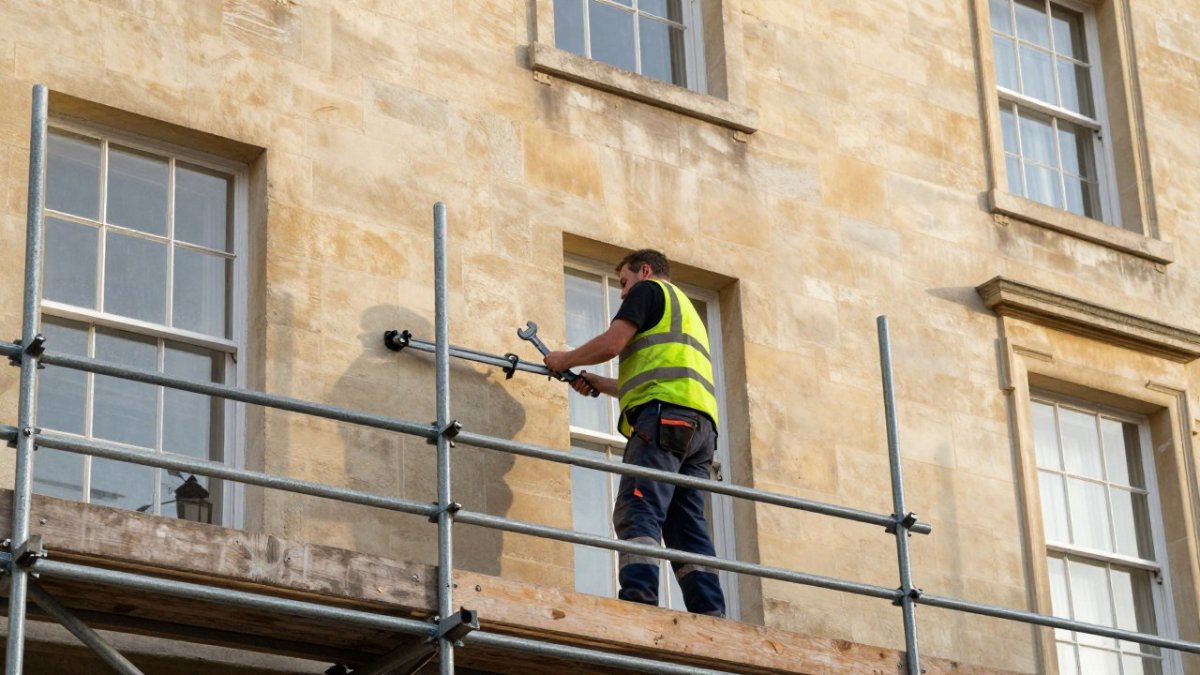
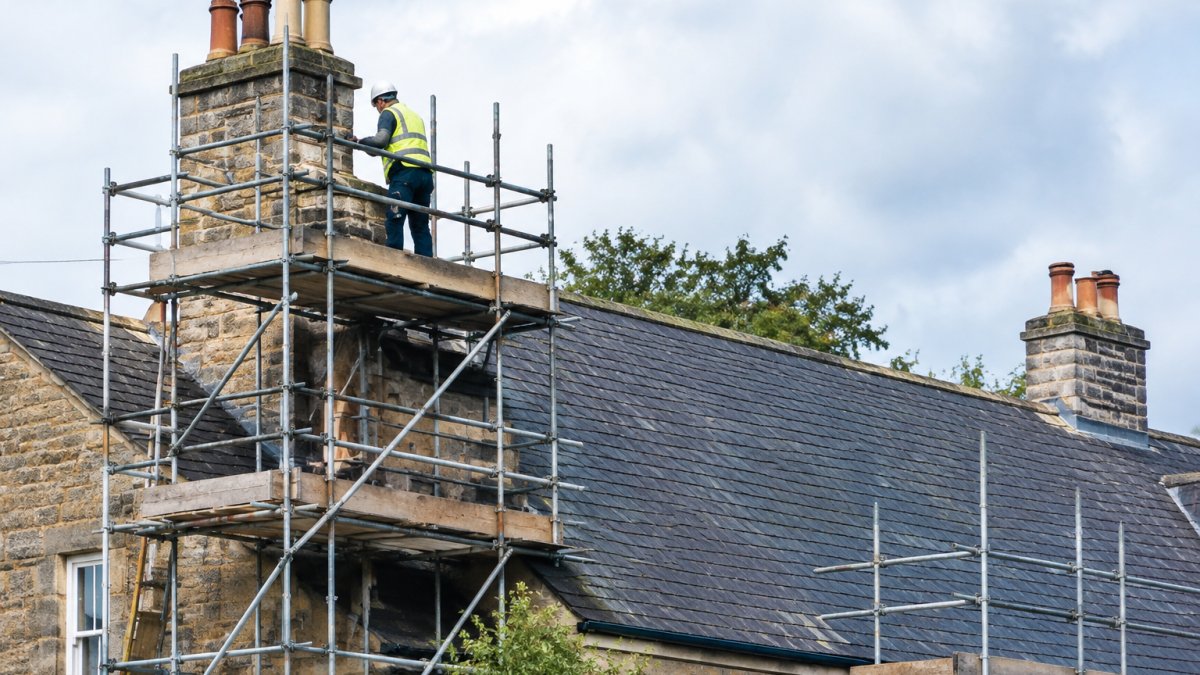
Chimney scaffolding gives a working platform around the stack itself, while full roof access scaffolds the roof slope or elevation. The choice between scaffolding for chimney repairs vs full roof access comes down to where the work sits and how far it spreads.
A flaunching repair at the stack rarely needs a full elevation. A valley or tile replacement usually does.
A chimney scaffold is a small, targeted structure built to reach one stack; full roof scaffolding is a larger structure that reaches the whole roof surface.
Below, we break down the seven signs that point to one or the other, with cost benchmarks and the Bath-specific constraints that change the answer.
When Chimney Repairs Need Scaffolding and When They Don't
Not every chimney job needs a scaffold. Repointing a few loose joints at low level can sometimes be done from a roof ladder, but anything above standing height on a pitched roof is a different matter.
The Health and Safety Executive guidance on working at height is clear that work should be planned to avoid height where possible, and where it cannot be avoided, safe access must be provided. That principle drives most decisions here.
Work that a chimney scaffold can cover
A chimney-only scaffold suits jobs confined to the stack and the roof immediately around it:
- Replacing or repairing chimney flashing
- Repointing the stack and re-flaunching the crown
- Fitting or replacing a chimney cap or cowl
- Removing a redundant pot or stack
- Minor masonry repairs to the stack itself
Jobs that force full roof access
Full roof scaffolding becomes necessary when the work leaves the chimney and spreads across the roof:
- Tile replacement across a slope
- Valley and lead work
- Full roof covering replacement
- Rooflight or dormer work
- Any job requiring a walkable platform across the roof surface
The dividing line is simple. If a tradesperson needs to move across the roof, a chimney scaffold will not get them there safely.
Scaffolding for Chimney Flashing Repairs: Why Access Height Matters
Flashing is the weak point at the base of any stack, and it is where most chimney leaks start. Scaffolding for chimney flashing repairs needs to put the worker at the correct height to lift the old lead and dress the new.
Access height matters for two reasons. Flashing work happens at the junction between stack and roof covering, often below the roofline on a pitched roof, and the repair must be watertight, so the worker needs both hands free and a stable platform.
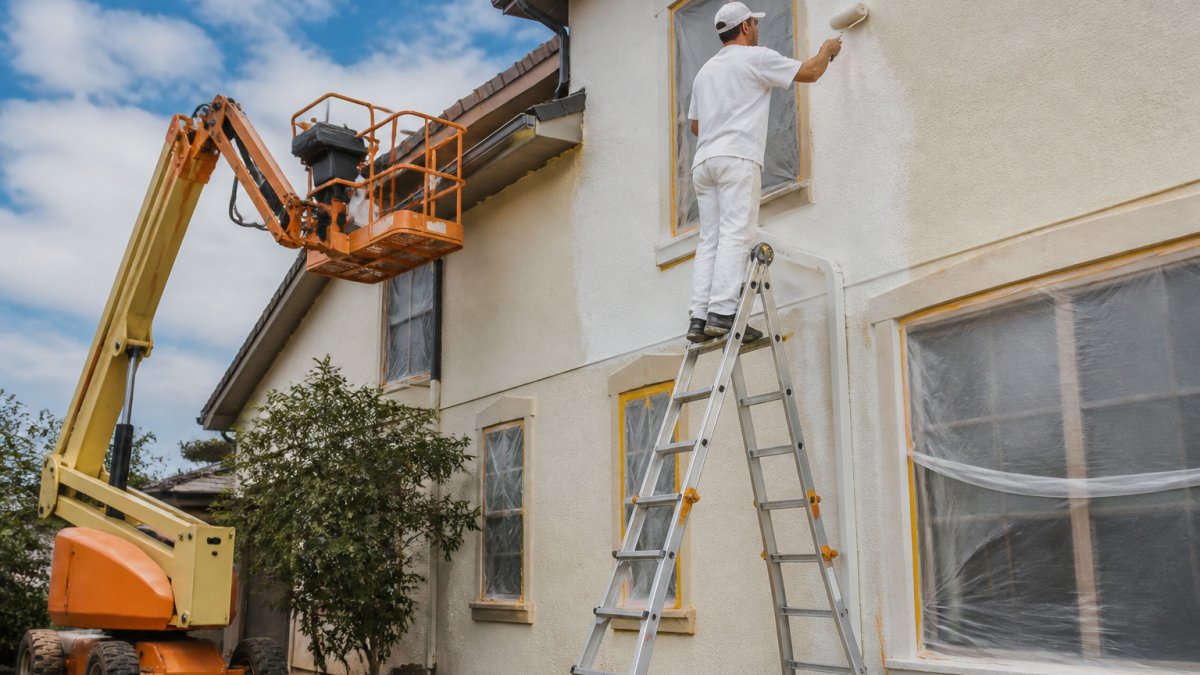
A roof ladder can reach flashing on a shallow pitch in good conditions. On a steep pitch, or where the stack sits on a valley, a working platform with guardrails is the practical answer.
If your leak appears after heavy rain and tracks down the stack, get the flashing checked before assuming the roof covering has failed. It is a common mistake to replace tiles when the lead was the problem.
What Chimney Scaffolding Cost Looks Like Against Full Roof Scaffolding
Published UK benchmarks put a chimney or saddle scaffold at roughly £350 to £650, according to MyJobQuote's scaffolding cost guide. Single-access chimney scaffolding is listed at £400 to £900 by MyBuilder's scaffolding price breakdown, depending on the job.
Full elevation access sits higher. A full front or side elevation is typically quoted at £700 to £1,200 in A.M.A Scaffolding's hire guide, while a two-storey semi-detached house scaffold is listed at £800 to £1,500 per week by MyBuilder.
| Access type | Published guide range | Best for |
|---|---|---|
| Chimney or saddle scaffold | £350 - £650 | Stack-only repairs, flashing, repointing |
| Single-access chimney scaffold | £400 - £900 | One-sided stack work with more complexity |
| Full front or side elevation | £700 - £1,200 | Roof repairs across a slope, painting, windows |
| Two-storey semi-detached hire | £800 - £1,500 per week | Whole-house or whole-roof projects |
The figure you receive depends on a few cost drivers that apply equally to chimney scaffolds and full roof scaffolds.
Height and lift count. Scaffolding is priced in lifts, the horizontal working platforms stacked up the elevation. A full roof scaffold needs a lift at eaves level plus enough height above to work the slope safely.
Hire duration. The scaffold is erected, used and struck within the hire window, and a longer project adds to the overall hire cost.
Ground conditions and access. A scaffold on firm, level ground with clear space for a lorry is quick to build.
Pavement or highway licence. Where the scaffold stands on or over the public pavement, the local highway authority will usually require a licence. The licence period must cover the whole hire.
Adaptations around the stack. A chimney scaffold often needs a small birdcage or independent section around the stack itself, with the working platform set at the right height for flashing, repointing or flaunching.
Like-for-like comparison. When you compare quotes, check that each states the access type, the number of lifts, the hire period, whether a pavement licence is included, and what erection and dismantle cover.
Free, no-obligation quotations →
We provide free, no-obligation quotations so you can see the figure for your own property, with the access type and hire period set out clearly.
Scaffold Tower for Chimney Repairs: Where It Works and Where It Fails
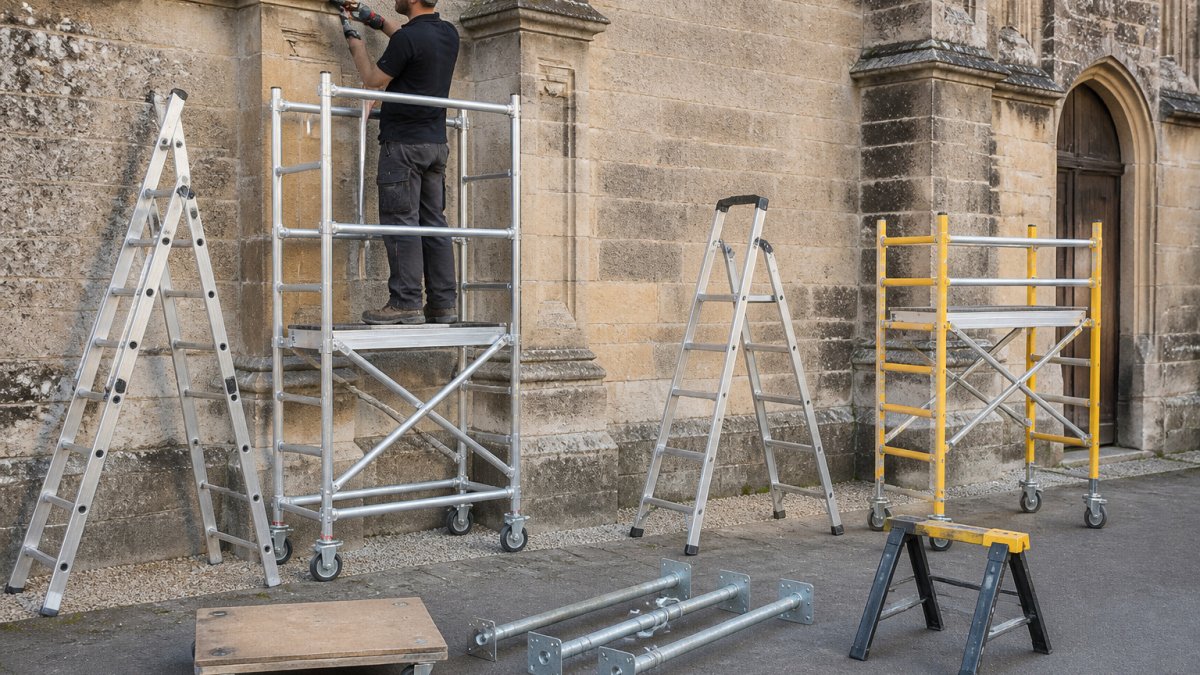
A scaffold tower for chimney repairs works when the stack is reachable from firm, level ground at the base of the building and the work is on the lower portion of the stack. It fails when the chimney sits back from the eaves, on a steep roof, or above the tower's safe working height.
Towers are quick to erect and cheaper than a full scaffold. They suit single-storey extensions with a chimney, or a stack on a low building where the platform lands at the right level.
Where they fall short:
- The stack is set back from the wall line, so the tower cannot reach it
- The roof pitch is steep and the tower top is below the working area
- The ground is uneven, sloped or obstructed
- The work needs access to more than one side of the stack
Multiple-sided access is the usual reason a tower is not enough. Repointing a stack properly means working around it, and a tower gives you one face.
You can see how we have handled real chimney and roof access jobs by browsing our scaffolding project gallery.
Full Roof Scaffolding: Roof Pitch, Surface and Access Constraints
Full roof scaffolding is governed by the roof itself. Pitch, surface condition and access constraints decide whether a standard independent scaffold works or whether something more specialised is needed.
Roof pitch changes everything. A shallow pitch can sometimes be worked from a scaffold with a roof ladder. A steep pitch needs a platform at eaves level and proper fall protection above it. The NASC guidance on scaffolding safety sets out the standards reputable firms work to.
Surface condition matters too. Old clay tiles, slate and lead all behave differently underfoot, and a fragile roof covering may need crawling boards or a temporary roof rather than direct access.
Access constraints at ground level are the third factor. Narrow pavements, party walls, extensions and conservatories all affect where the scaffold can be based and how it is tied back to the building. A scaffold bay that cannot be founded properly is a scaffold that cannot be built safely.
Bath Site Constraints: Pavements, Neighbours and Period Stonework
Bath properties bring constraints that a generic scaffolding guide will not cover.
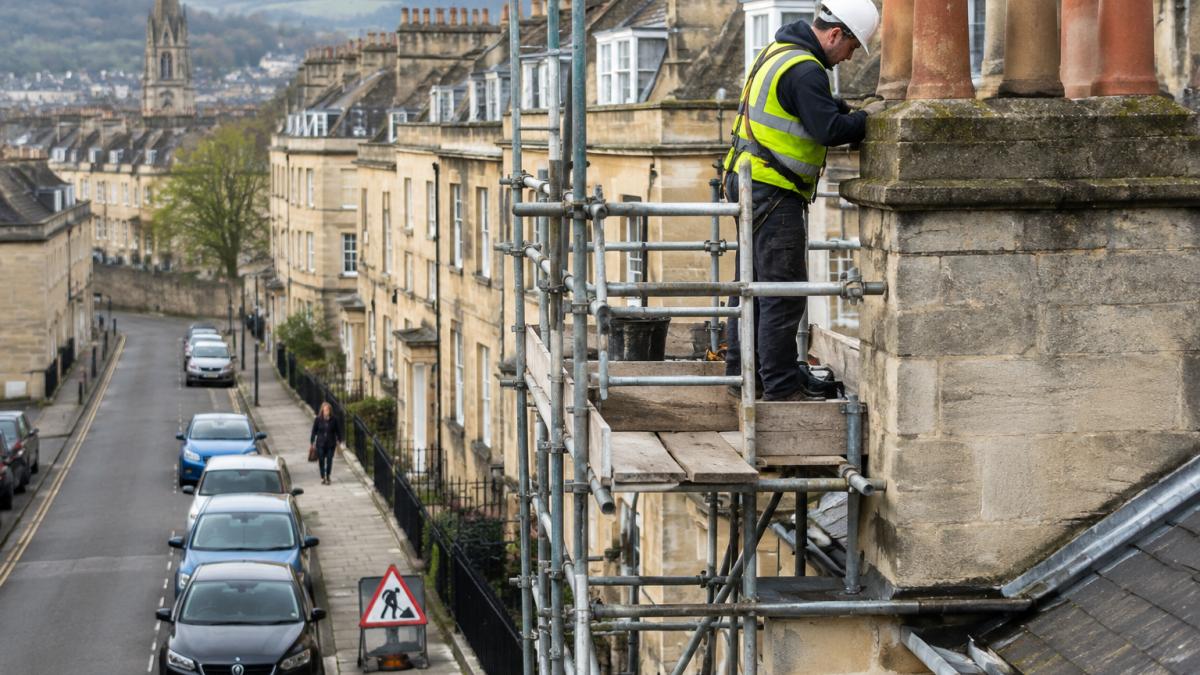
Conservation areas and listed buildings. Much of central Bath falls within a conservation area, and many properties are listed.
Pavement and highway licences. A scaffold that stands on or over the public pavement needs a licence from Bath & North East Somerset Council as the local highway authority. The licence covers the footprint, any protected walkway for pedestrians, and the period of occupation.
Neighbour access and party structures. Terraced and semi-detached properties often need access over or from a neighbour's land to erect a chimney scaffold, particularly where the stack sits on a party wall or the only practical base is the neighbouring driveway.
Protecting Bath stone. Standard scaffold tubes and fittings can chip or mark Bath stone if they are not padded and positioned carefully. Our guide to protecting Bath stone during scaffolding covers the practical steps.
Narrow streets and delivery. Getting equipment to a narrow Bath street is a planning exercise in itself. Our guide to scaffolding access for tight spaces explains how we approach it.
Requesting a Free Chimney Scaffolding Quote
The fastest way to settle the chimney versus full roof question is to have the property looked at. Photos of the stack, the roof pitch and the street help, but nothing replaces a site visit.
A good quote should state the access type, the hire period, what is included in the erection and dismantle, and whether a pavement licence is needed. If a company cannot explain why it has chosen a chimney scaffold over full roof access, ask them to.
We have over 35 years of experience, with our own equipment, transport and crews, delivering a seamless service from initial quote to final dismantle. You can see the scaffolding services we offer, or contact us for a free, no-obligation quote.
Frequently Asked Questions
Do chimney repairs always need scaffolding?
No. Small jobs reached from a stable working platform, such as repointing a couple of courses or refitting a pot, can sometimes be done from a chimney scaffold or a properly tied tower. Anything involving the full stack, flashing at the roofline, or work above the ridge needs proper access. Ladders alone are not a working platform under the Work at Height Regulations 2005, and standing-height work on a roof slope needs guardrails and toe boards. Ask the contractor to state the access method in writing before work starts.
How much does chimney scaffolding cost compared with full roof scaffolding?
Pricing depends on access type, hire period and heritage constraints such as street access. For a written, itemised quote for your property, request one from Able Scaffolding Bath.
Can a scaffold tower be used for chimney repairs?
A tower works when the chimney is reachable from level ground or a flat surface and the tower can be tied and built to the right height. It falls short where the chimney sits behind a pitched roof, where the ground is uneven or sloping, or where the tower would need to span a pavement. Towers also give access to one face only, so any work on the far side of the stack means moving and rebuilding it, which adds time and cost.
What should I ask a scaffolder before hiring them for chimney work?
Ask who erects and dismantles the structure. Confirm whether the quote covers drawings. Ask how long the hire period is and what a weekly extension costs. A company with its own crews and equipment, rather than subcontractors, is easier to hold to a schedule and a single point of responsibility.
The difference between a £400 chimney scaffold and a £1,200 roof scaffold is not the price. It is whether the access actually matches the job. Get that wrong and you pay twice. Get it right and the repair is done once, safely. Get started with Able Scaffolding Bath and a free, no-obligation quotation for your chimney or roof access.