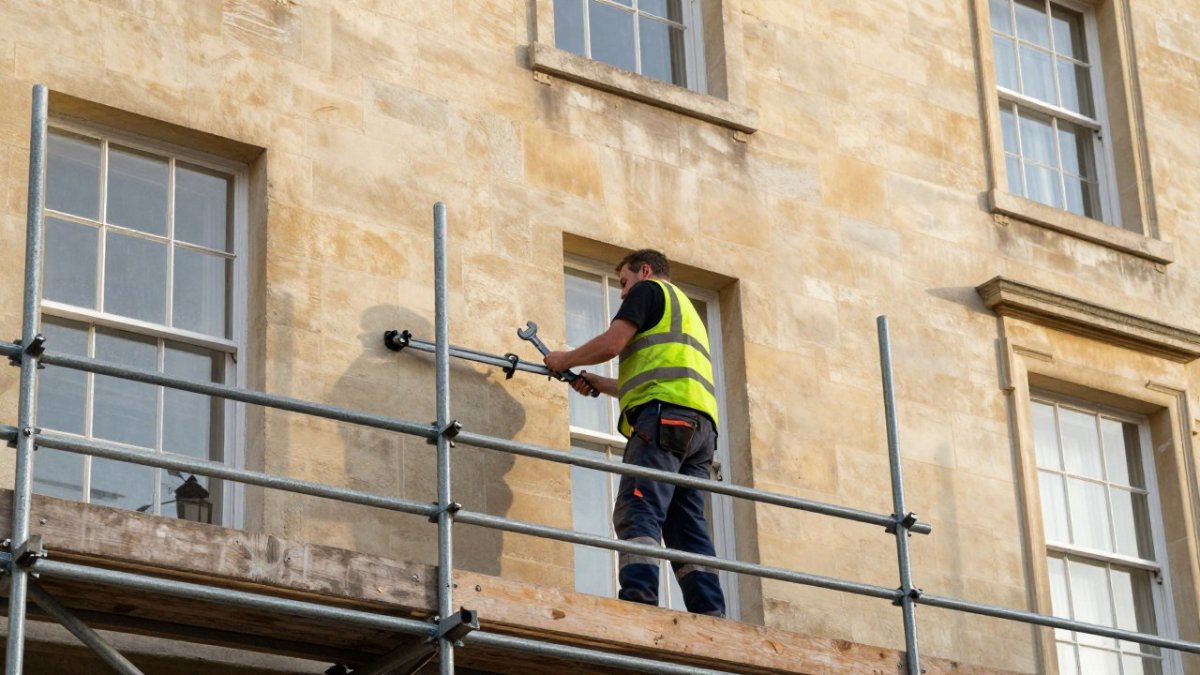
 comparison
Scaffolding Hire or Buying for Home Renovation in Bath
Last Updated: November 10, 2026
Quick Summary
For most one-off home renovations in Bath, scaffolding hire is the better choice, because you pay only for the weeks you need and avoid storage and maintenance. Buying scaffolding only pays off when it is used again and again across many jobs. The right answer depends on how often you will use it, how long the job runs, and your cash and storage.
- Hiring suits a single loft conversion or rear extension lasting a few weeks.
- Hire is typically charged per week, so every extra week on site adds to the bill.
- Buying shifts cost upfront and adds transport, inspection, maintenance and storage.
- Ownership makes sense only when scaffold is needed repeatedly.
- Ask the hire company for the extension rate before you sign.
Table of Contents
- Hiring or Buying Scaffolding: What the Decision Really Turns On
- Scaffolding Hire Cost in the UK: Upfront and Ongoing Costs
- Scaffolding Hire Duration and How Project Delays Change the Maths
- Buying Scaffolding: Storage, Erection, Inspection and Resale
- Scaffolding for Period Properties: Protecting Bath Stone and Access on Narrow Streets
- A Homeowner Cost Comparison for One Renovation
- Scaffolding Quote Checklist Before You Commit to Hire or Purchase
- Frequently Asked Questions
Scaffolding hire vs buying for a home renovation is a decision most homeowners only face once a quote lands on the doormat. Able Scaffolding Bath has over 35 years of experience in the trade. For most one-off renovations, hiring wins. For a builder who needs scaffold on site every week, buying can pay off. The right answer depends on how often you will use it, how long the job runs, and how much cash and storage you have. This guide walks through each factor to help you weigh the decision.
Scaffolding is a temporary structure of tubes, boards and couplers that gives safe access to work at height. The cost of getting it wrong is not just money: poorly erected or poorly inspected scaffold is a serious safety risk.
Hiring or Buying Scaffolding: What the Decision Really Turns On
The decision turns on four things: frequency of use, project length, upfront cash and storage space. A single loft conversion or rear extension usually means a few weeks of scaffold. Hire covers that neatly, with no capital tied up and no equipment to store afterwards.
Buying makes sense only when scaffold is needed again and again.
Watch out: ownership carries costs beyond the purchase price, including inspection, repair, transport and a place to keep the kit dry.
Scaffolding Hire Cost in the UK: Upfront and Ongoing Costs
Hire costs can be spread across the project, depending on the size and type of scaffold, the height, access and the hire period, so pricing depends on the specifics of each job. Visit our website for current pricing or to request a free, no-obligation quote.
Buying shifts the cost to the front. You pay for the equipment, then pay again in time and money for transport, inspection, maintenance and storage.
The table below sets out the main cost points for hiring versus buying scaffolding, drawn from the sections above.
| Cost area | Hire | Buying |
|---|---|---|
| Upfront cash | Spread across the project | Paid at purchase |
| Charging basis | Typically per week | One-off equipment price |
| Extra costs | Extension weeks and collection timing | Transport, inspection, maintenance, storage |
| Who carries the risk | Hire company provides the kit | Owner carries liability and insurance |
Scaffolding Hire Duration and How Project Delays Change the Maths
Hire duration is where many domestic budgets can go wrong: hire is typically charged per week, so every extra week on site adds to the bill. A scaffold booked for six weeks and needed for eight costs more than planned, and the overrun is usually caused by things outside the homeowner's control.
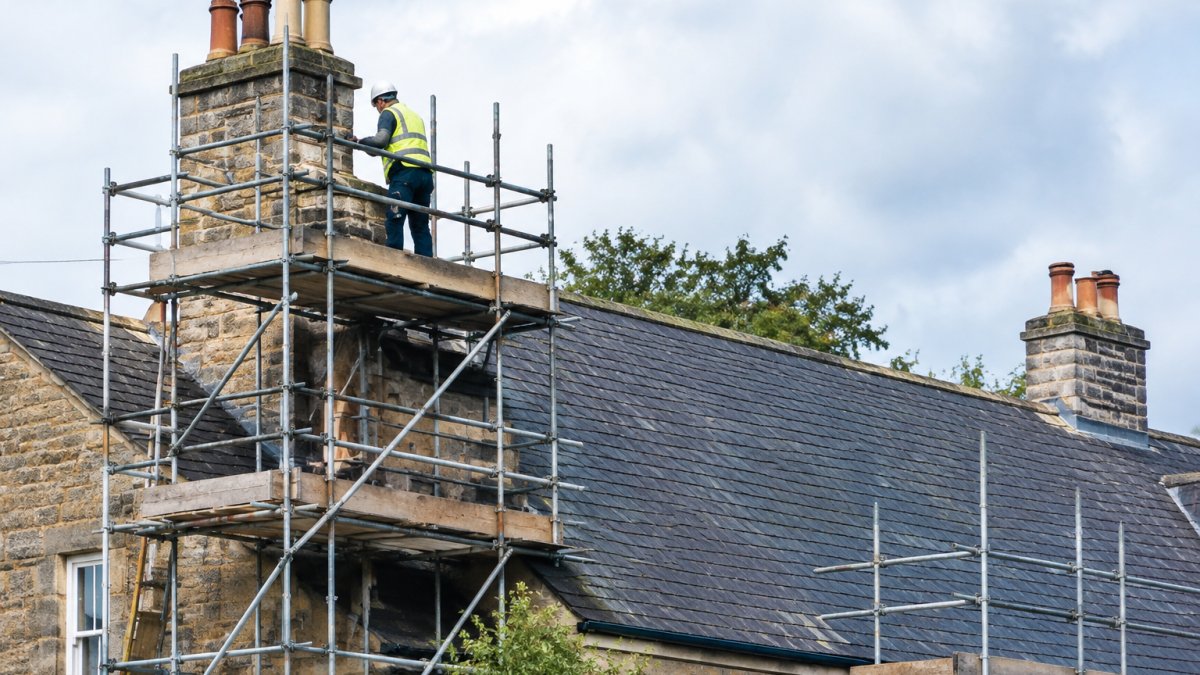
What actually stretches a programme in Bath. Weather is the obvious one, rain stops repointing and painting, and wind can stop work at height. Less obvious is sequencing: if the roofer finishes late, the scaffold stays up while the next trade waits. In period properties, stone protection and listed-building consent can add time before scaffold even goes up, and narrow-street access can mean the erection crew needs a second visit. Each of these keeps the hire clock running.
How extensions are priced. Ask two questions before you sign: what does an extra week cost, and how much notice do you need to give for collection? Collection timing can affect the final bill, so check it before the scaffold goes up.
Owned equipment versus the hire clock. A delayed project still ties up your site, your storage and your time, and you still need competent inspection after any alteration.
Bath-specific permission timing. If scaffold or materials occupy the public pavement or highway, a permit from the local council may be required, so check before work starts (Application conditions - Scaffolding hoarding permits | Scaffold and hoarding permit).
Practical contingency. Build a realistic overrun into your timetable, most practitioners allow a buffer of a week or two on external work, and ask the hire company to quote the extension rate up front so the comparison with buying is honest. If the programme is genuinely uncertain, a slightly longer initial hire period can be cheaper than repeated extensions.
Watch out: a hire agreement that looks cheap per week can become expensive if collection is missed, so confirm the terms before the scaffold goes up.
Buying Scaffolding: Storage, Erection, Inspection and Resale
If you buy, plan for the full lifecycle. You need dry storage for tubes, boards and fittings, and transport to move them. Erection must be carried out by a competent person, and scaffold must be inspected regularly and after any alteration (Scaffolds). These are safety duties, not optional extras.
Resale value falls as equipment ages and is used, so treat any resale figure as uncertain. Insurance and liability also sit with the owner.
Scaffolding for Period Properties: Protecting Bath Stone and Access on Narrow Streets
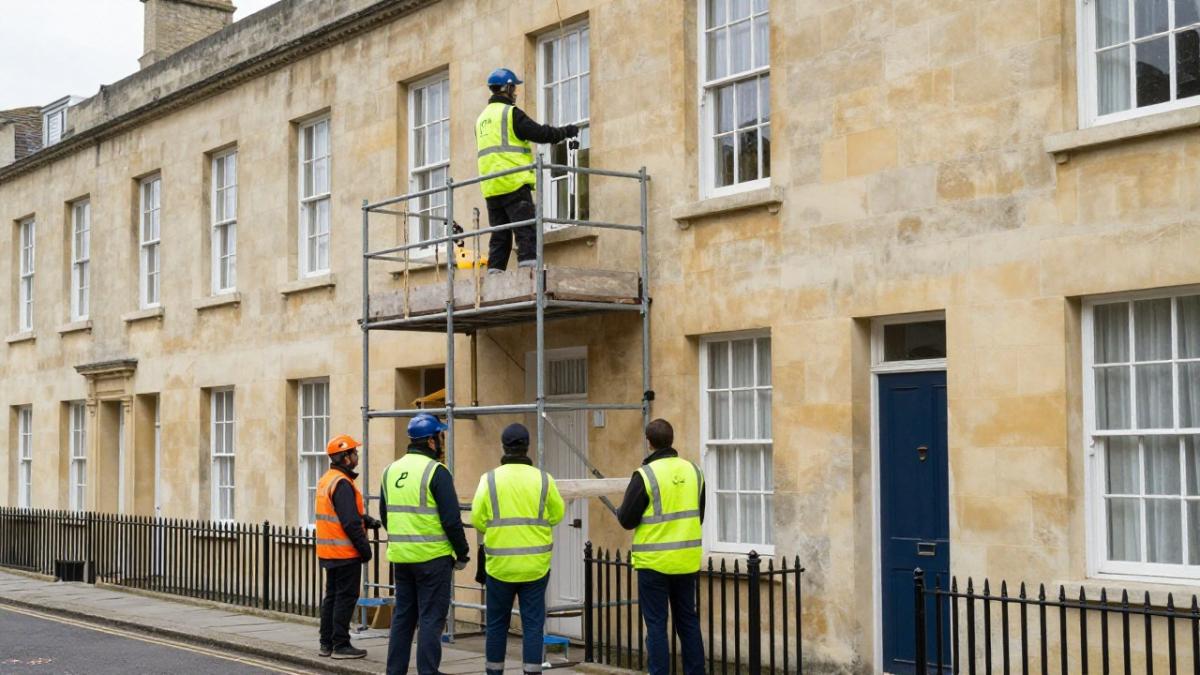
Bath stone is soft and easily damaged, and many properties here are listed. Scaffold fixings, ties and boards must be planned so they do not chip or stain the original stonework, and access must suit narrow streets where equipment cannot always be parked close to the building.
Permissions matter too. If scaffold or materials will occupy the public pavement or highway, you may need a permit from the local council, so check before work starts. Able Scaffolding Bath plans access and protection around sensitive buildings and site constraints.
A Homeowner Cost Comparison for One Renovation
Most hire-versus-buy advice is written for builders who use scaffold every week. This section is written for a homeowner doing one job, using three common Bath renovations as worked examples. The figures below are not a rate card, so always get a project-specific quote. They show the shape of the decision rather than actual prices.
The break-even logic. Compare total cost of ownership against total hire cost over the full programme, not the headline weekly rate. Ownership tends to pay off only when the same equipment is reused often across many jobs. For a one-off renovation, hire is often simpler on cash flow, storage and risk. If your programme is likely to overrun, ask the hire company what an extension week costs before you sign.
Bath-specific cost drivers. Narrow streets in the city centre and conservation areas can mean scaffold cannot be delivered or stored close to the building, adding transport and handling time. If scaffold or materials occupy the public pavement or highway, a permit from the local council may be needed. Build these into the comparison rather than treating them as surprises.
Watch out: a cheap weekly rate can hide erection, collection and extension charges, so ask for the all-in figure for your full programme before comparing it with a purchase price.
Scaffolding Quote Checklist Before You Commit to Hire or Purchase
Before you sign anything, check the following:
- How many weeks is the scaffold needed, and what happens if the job overruns?
- Is the quote for erection, weekly hire and collection, and are any of these excluded?
- Who erects, alters and dismantles the scaffold, and are they competent?
- Does the access plan protect your stonework and suit your street?
- Do you need a council permit for pavement or highway use?
- Is insurance and public liability cover in place?
- If buying: where will it be stored, who will inspect it, and what will it cost to maintain?
You can see the kinds of projects we handle on our completed scaffolding projects page, or find our scaffolding services and request a free quote on the scaffolding services in Bath page. Our About Able Scaffolding page explains more about the company.
For a period property, read our guide on 5 steps to protect Bath stone during scaffolding before you agree a plan.
Get in touch with Able Scaffolding Bath for a free, no-obligation quotation and we will plan access and protection around your building.
Frequently Asked Questions
Is it cheaper to hire or buy scaffolding for a home renovation?
For a single renovation, hiring is usually cheaper because you avoid the purchase price, storage, transport and inspection costs of owned equipment. Buying only tends to pay off when you use scaffolding repeatedly over several years. Pricing depends on the scaffold type, height, hire period, delivery and collection, so compare full quotes rather than weekly rates alone. Able Scaffolding Bath offers free, no-obligation quotations, which is a practical way to test the numbers for your own project.
How long can you hire scaffolding for?
Hire periods are normally agreed up front and can be extended if the work overruns. It helps to ask how extensions are priced before you sign. Building in a realistic buffer for weather, approvals and trade scheduling reduces the risk of paying for unused time. Discuss your expected programme with your scaffolder when you request a quote.
Do I need a professional to erect scaffolding at my home?
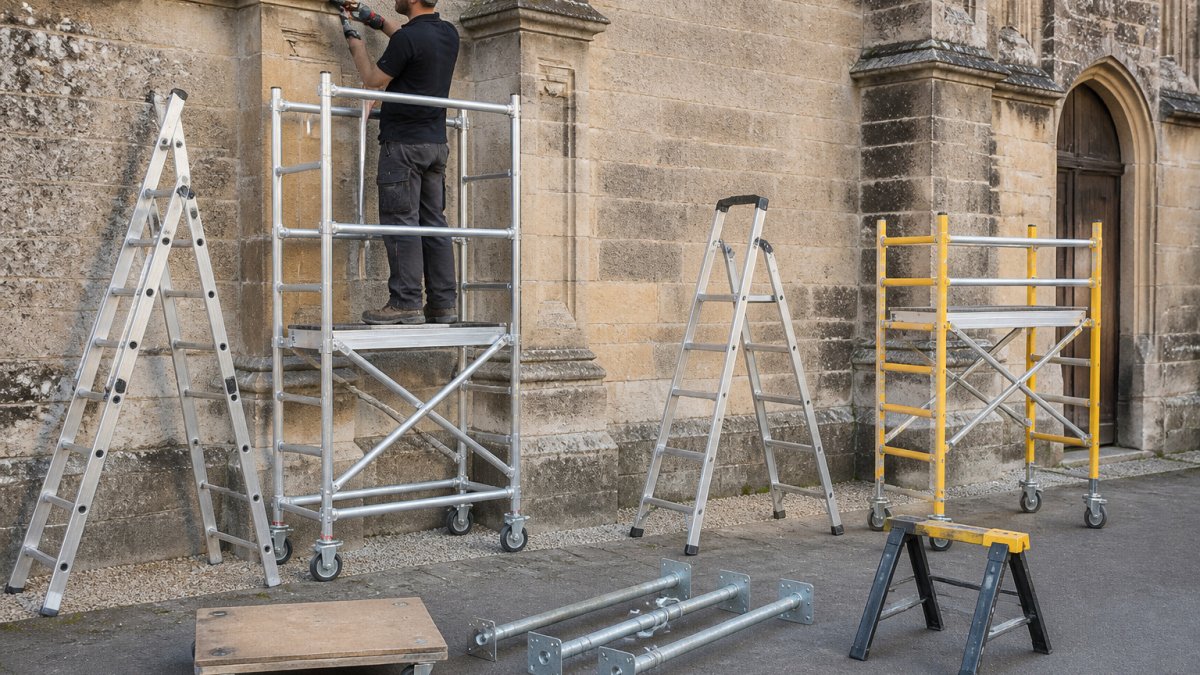
Yes. Scaffolding should be erected, altered and dismantled by competent people who understand load, bracing and access requirements, particularly on period properties where the structure must not damage the building. DIY towers are suitable only for small, low-level jobs. For a full scaffold on a home renovation, a professional erection protects both you and your property.
What should I check before hiring scaffolding?
Check what the quote covers, and any permissions needed for pavement or highway access. Ask who carries the work out, and how extensions and delays are charged. Confirm how the company will protect heritage stonework and how access will be planned on narrow streets. Use the checklist in this article to compare quotes like for like.