 comparison
7 Alternatives to Traditional Scaffolding for Small Repairs
Quick Summary
For small repairs, a mobile scaffold tower, an Easi-Dec access platform, a cherry picker hire or a ladder or roof ladder can often replace full scaffolding. The best choice depends on the height, duration and weight of the work, and on the surface and site conditions.
- A mobile scaffold tower suits long, low runs of guttering or fascia and can be moved along a wall.
- Towers need firm, level ground and locked wheels, and must never be moved with a person on them.
- Never extend a tower with ladders or boxes; use a tower of the correct height instead.
- Ladders are only appropriate for light, short-duration work, not sustained work at height.
- Listed buildings often need lighter, non-invasive access, and planning consent may be required.
Table of Contents
- Why Full Scaffolding Is Not Always Needed for Small Jobs
- Scaffold Tower for Roof Repairs: When a Mobile Tower Works
- Easi-Dec Access Platform: Safe Access for Low-Level Work
- Cherry Picker Hire for Roof Repairs: Reach Without Erecting Structures
- Roof Repairs Without Scaffolding: Ladders, Roof Ladders and Hybrid Methods
- Comparison: Which Option Suits Which Repair
- Bath Street, Listed Building and Permit Considerations
- Booking a Site Assessment Before You Choose Access Equipment
- Frequently Asked Questions
Why Full Scaffolding Is Not Always Needed for Small Jobs
Last Updated: November 2, 2026
Full scaffolding is the right answer for many jobs, but not for every small repair. A blocked gutter, a few slipped tiles or a chimney pointing job can often be handled with far less kit. Able Scaffolding Bath provides scaffolding solutions for domestic, commercial and heritage projects across Bath and the surrounding areas. When planning access for small jobs, the key question is what the smallest access solution is that does the job safely.
Erecting a full scaffold takes time, space and money, and it changes how a property looks and functions for the length of the job. For a single roof slate or a short run of guttering, that overhead can outweigh the work itself. Small repairs suit lighter, faster methods that match the scale of the task.
Choosing the right option starts with the job, not the equipment. Consider how high the work is, how long it will take, how much weight the worker carries, and what the surface is made of. Ground conditions, neighbouring properties and any listed building constraints matter too.
Safety rules still apply to every option. Working at height is governed in Britain by the Work at Height Regulations 2005, which require a suitable, properly planned method for any task above ground level. Whatever you choose, the access must be fit for purpose and inspected before use.
Scaffold Tower for Roof Repairs: When a Mobile Tower Works
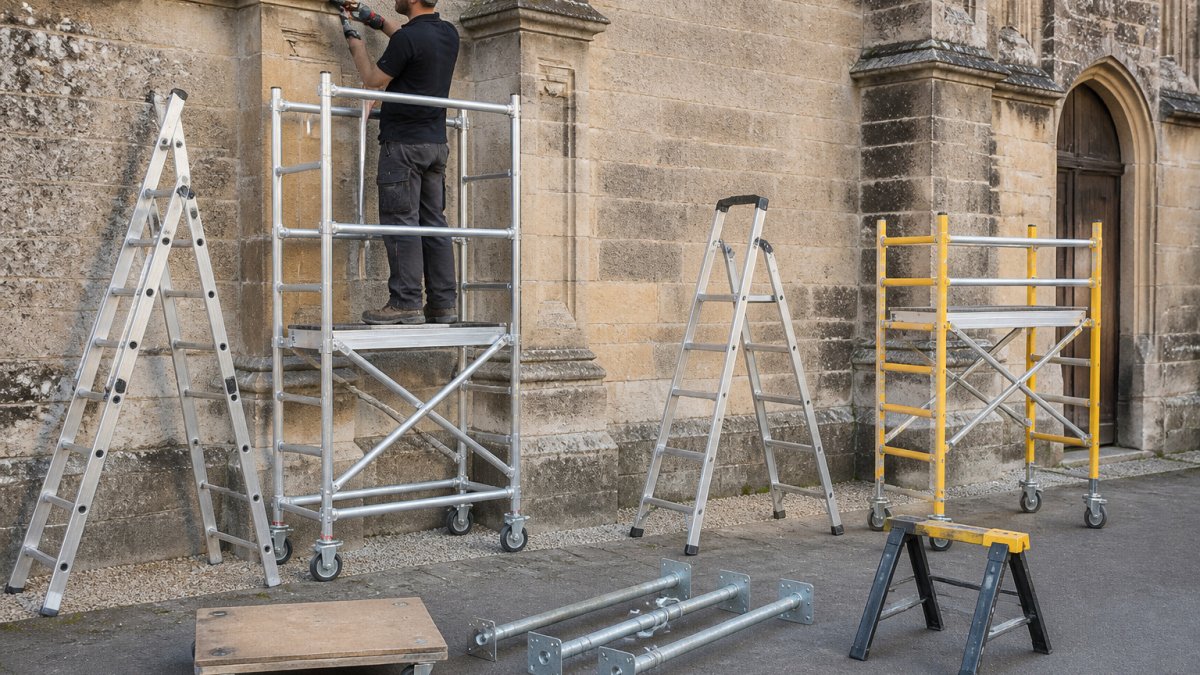
A mobile scaffold tower is often the best middle ground for small roof and gutter jobs. It is a freestanding frame on castors with a working platform, guard rails and an access ladder. It can be moved along a wall as the work progresses, which suits long, low runs of guttering or fascia.
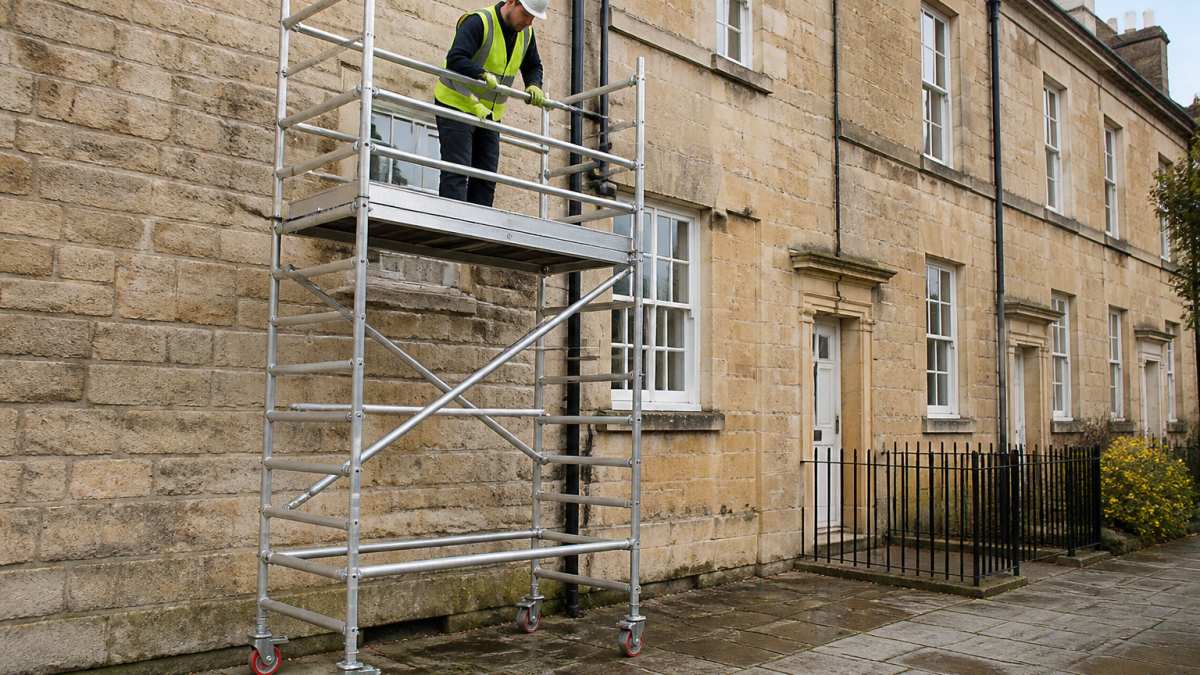
Towers work best on firm, level ground. The wheels must be locked before anyone climbs, and the tower should never be moved with a person on it. Height limits depend on the base dimensions, so a narrow tower on a sloping terrace path is a common cause of problems. Check the manufacturer's guidance and the sizes available before you commit.
A common mistake is choosing a tower that is too small for the reach needed. Working at the very edge of the platform is where accidents happen. Pick a tower that lets the worker stand comfortably inside the guard rails.
Watch out: never extend a tower with ladders or boxes to gain extra height (Tower scaffolds). Use a tower of the correct height instead.
We are able to provide drawings and site plans, which can be useful where access is tight.
Easi-Dec Access Platform: Safe Access for Low-Level Work
Easi-Dec access platforms are a type of podium or staging system used for low-level work where a full scaffold would be excessive. They are widely used for internal and external jobs at moderate heights, such as decorating, window repairs and minor masonry.
The main advantage is a stable, level working surface that can be assembled quickly without the full erection process of a traditional scaffold. They suit jobs where the worker needs to stay in one place for an extended period, rather than moving constantly along a wall.
Check that the platform is assembled according to the manufacturer's instructions and that all guard rails and toe boards are fitted. Ground conditions matter as much as the platform itself. Uneven or soft ground will compromise stability, whatever the system.
Cherry Picker Hire for Roof Repairs: Reach Without Erecting Structures
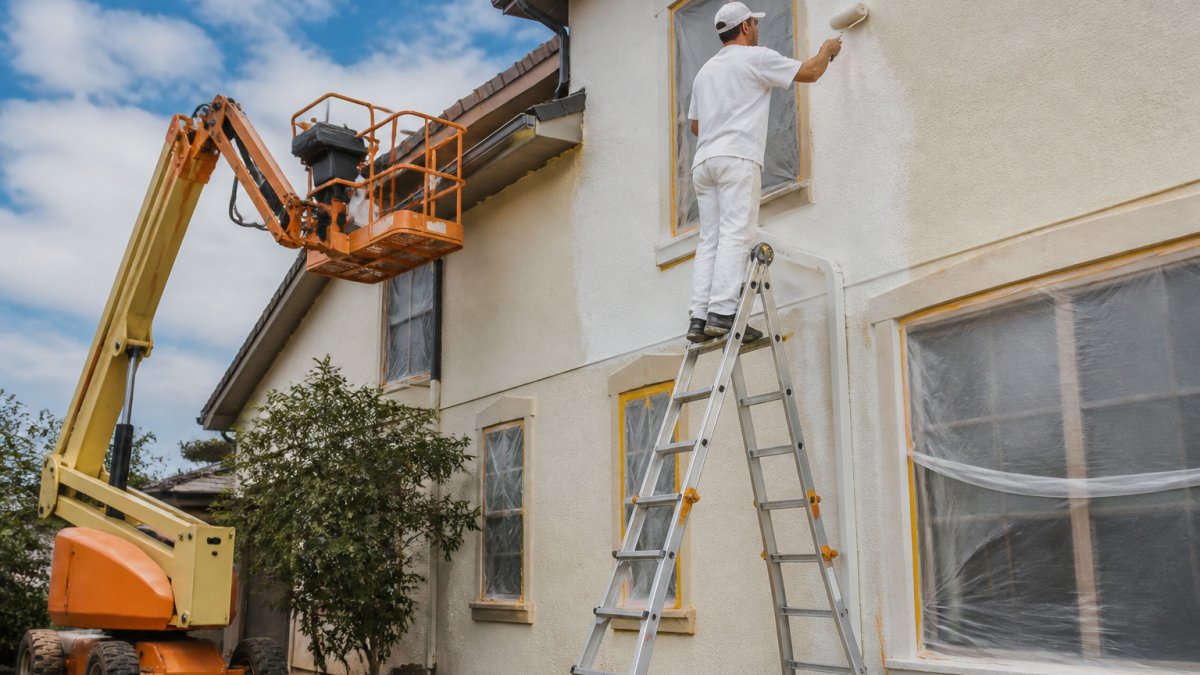
A cherry picker, or mobile elevating work platform (MEWP), lifts a operator in a basket to the working height. It avoids erecting any structure on the ground, which is useful where space is limited or the property cannot easily take scaffolding.
Free, no-obligation quotations →
Cherry pickers need a clear, firm area for the vehicle, and the operator must be trained and fully harnessed. They are less suited to jobs where tools or materials need to be moved along the building over time, and access for the machine itself can be a problem in narrow streets.
Pricing depends on quantity, dates and delivery, so please request a quote for your specific job.
Roof Repairs Without Scaffolding: Ladders, Roof Ladders and Hybrid Methods
For the smallest jobs, a standard ladder or a roof ladder may be enough. A roof ladder hooks over the ridge and gives a stable, spread-load working platform on a pitched roof. It is a practical option for a single slate or flashing repair, but it demands experience and a secure anchor point.
Many small jobs use a hybrid approach. A tower or platform handles the main work, with a ladder or roof ladder used for a short final task. Hybrid methods can cut costs while keeping safety intact, but the planning must be done properly beforehand.
Ladders are only appropriate for light, short-duration work (Safe use of ladders and stepladders). Once the job involves sustained work at height, a more substantial system is usually the safer choice.
Comparison: Which Option Suits Which Repair
| Option | Best for | Ease of use for small repairs | Main drawback |
|---|---|---|---|
| Mobile scaffold tower | Gutters, fascias, low eaves | Easy to move and set up | Needs firm, level ground |
| Easi-Dec access platform | Decorating, window and masonry work | Quick to assemble | Less mobile once set |
| Cherry picker hire | Roof work where space is tight | Quick positioning | Needs clear access for the vehicle |
| Ladder or roof ladder | Single slate or flashing repairs | Very simple | Limited to short, light tasks |
| Hybrid method | Mixed small jobs | Flexible | Needs careful planning |
Pros and cons at a glance:
- Mobile tower: pros include mobility and a clear working platform; cons include height limits and the need for firm ground.
- Easi-Dec platform: pros include quick assembly and stability; cons include reduced mobility once fixed.
- Cherry picker: pros include reach without a structure; cons include vehicle access and hire cost.
- Ladder or roof ladder: pros include simplicity and low cost; cons include unsuitability for extended work.
Bath Street, Listed Building and Permit Considerations
Bath has many narrow streets, terraced properties and listed buildings, and these shape which access method is practical. A tower or platform may be easier to position on a busy street than a vehicle, but local parking and access rules still apply.
Listed buildings need extra care. Fixings into historic stonework can cause lasting damage, so lighter, non-invasive methods are often preferred. Before work begins, check with your local planning authority whether any consents are needed, and whether the works affect the building's listing.
If the job takes up part of the public highway, a permit may be required. Speak to the local authority about the process early, because delays here can hold up a whole project.
Booking a Site Assessment Before You Choose Access Equipment
Choosing the right method is best done with a clear understanding of the site.
Able Scaffolding Bath offers free, no-obligation quotations. We plan access around the building and the site, and we use our own equipment, transport and crews from initial quote to final dismantle, so your job is not passed between companies. If you are unsure which option fits your repair, request a quote before you commit to any equipment.
Frequently Asked Questions
What are the alternatives to traditional scaffolding for small repairs?
The main alternatives are mobile scaffold towers, Easi-Dec style access platforms, cherry pickers (MEWPs) hired with an operator, and roof ladders or ladder-based methods for very light work. Each suits a different height, access route and type of repair. A small pointing or gutter job may only need a tower, while a valley repair across a wide roof may need a platform or a short hire. Costs and availability vary, so get a quote from a specialist such as Able Scaffolding Bath before deciding. Always check that the equipment can be set up safely on your site.
Can a scaffold tower be used for small roof repairs?
Yes, a mobile scaffold tower is often suitable for small roof repairs at eaves, dormers or gable ends where the work is close to the wall and the ground is firm and level. It must be erected by competent people, fitted with guard rails and toe boards, and kept within the manufacturer's height limits. Towers are not suitable on soft ground, uneven pavements or where the roof edge is far from the tower. Work at height must be planned and the equipment inspected before use.
Is an access platform safer than a ladder for exterior repairs?
For sustained work at height, a guarded access platform is generally safer than a ladder, because the worker has a stable working surface, guard rails and room for materials. Ladders suit only short, light tasks of limited duration. An access platform still needs proper setup, level ground and a trained operator. Where the work involves hot materials, heavy tools or two people, a platform or tower is usually the better choice.
When is a cherry picker suitable for a small repair?
A cherry picker, a type of mobile elevating work platform (MEWP), suits repairs that need reach over a wide area, such as a chimney stack, a high gable or a roof valley on a large house, where erecting a tower would take too long. Hire usually includes an operator and the machine needs firm, level ground and enough space to position. Narrow streets and parked cars can rule it out. Pricing depends on hire duration, delivery and site access, so ask for a quote rather than relying on estimates.